Tarangire National Park – Land of Baobabs & Giants
Map of Tarangire
Tap to enlarge map
Tarangire National Park
Tarangire doesn’t get the headlines. The Serengeti gets the headlines. Ngorongoro gets the headlines. Tarangire is the park that people add to the itinerary because their guide suggested it, and then it turns out to be the day they talk about most when they get home.
It earns that quietly.
The Landscape
Tarangire sits in northern Tanzania, about two to three hours from Arusha, covering roughly 2,850 square kilometres of a landscape that looks unlike anywhere else on the northern circuit.
The baobabs are the first thing you notice. Ancient, enormous, and distributed across the park in a way that makes every game drive feel like moving through a landscape from another era. Some of these trees are thousands of years old. They store water in their vast trunks, which elephants learned long ago — in the dry season you’ll find fresh gouges in the bark where herds have been excavating moisture from the wood.
The Tarangire River runs through the park and is, in the dry season, the reason everything is here. The park’s other water sources dry up between June and October, and the river becomes the only reliable source across a vast area. Animals come from far outside the park boundaries to drink. The concentrations that result are extraordinary.
The Elephants
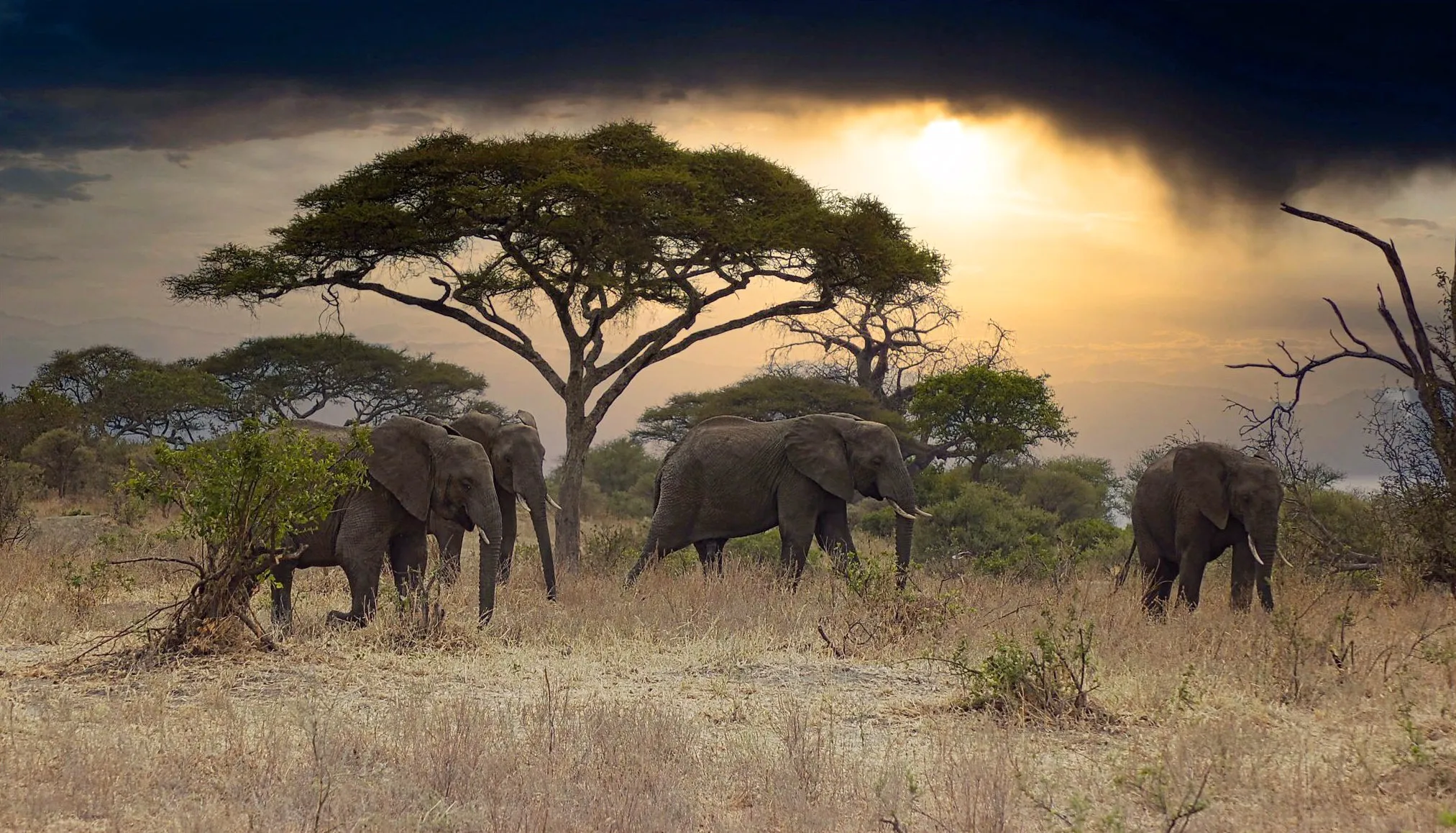
Tarangire has one of the highest elephant densities in Tanzania. In peak dry season, herds of a hundred or more are not unusual. You will spend time — genuine, unhurried time — watching elephants do what elephants do: drink, dust-bathe, discipline calves, move through the acacia woodland in long purposeful lines.
These are family herds with complex social structures. A good guide will point out the matriarch, explain the hierarchy, read the body language. Watching a large herd interact over a period of an hour, without another vehicle in sight, is one of the experiences that makes Tanzania’s parks worth crossing the world for.
The Silale Swamp in the south of the park stays wet long after the surrounding landscape has dried out. In the late dry season this becomes one of the great wildlife spectacles on the northern circuit — elephants, buffalo, zebra, wildebeest, and the predators that follow them, all converging on the remaining water.
The Rest of the Wildlife
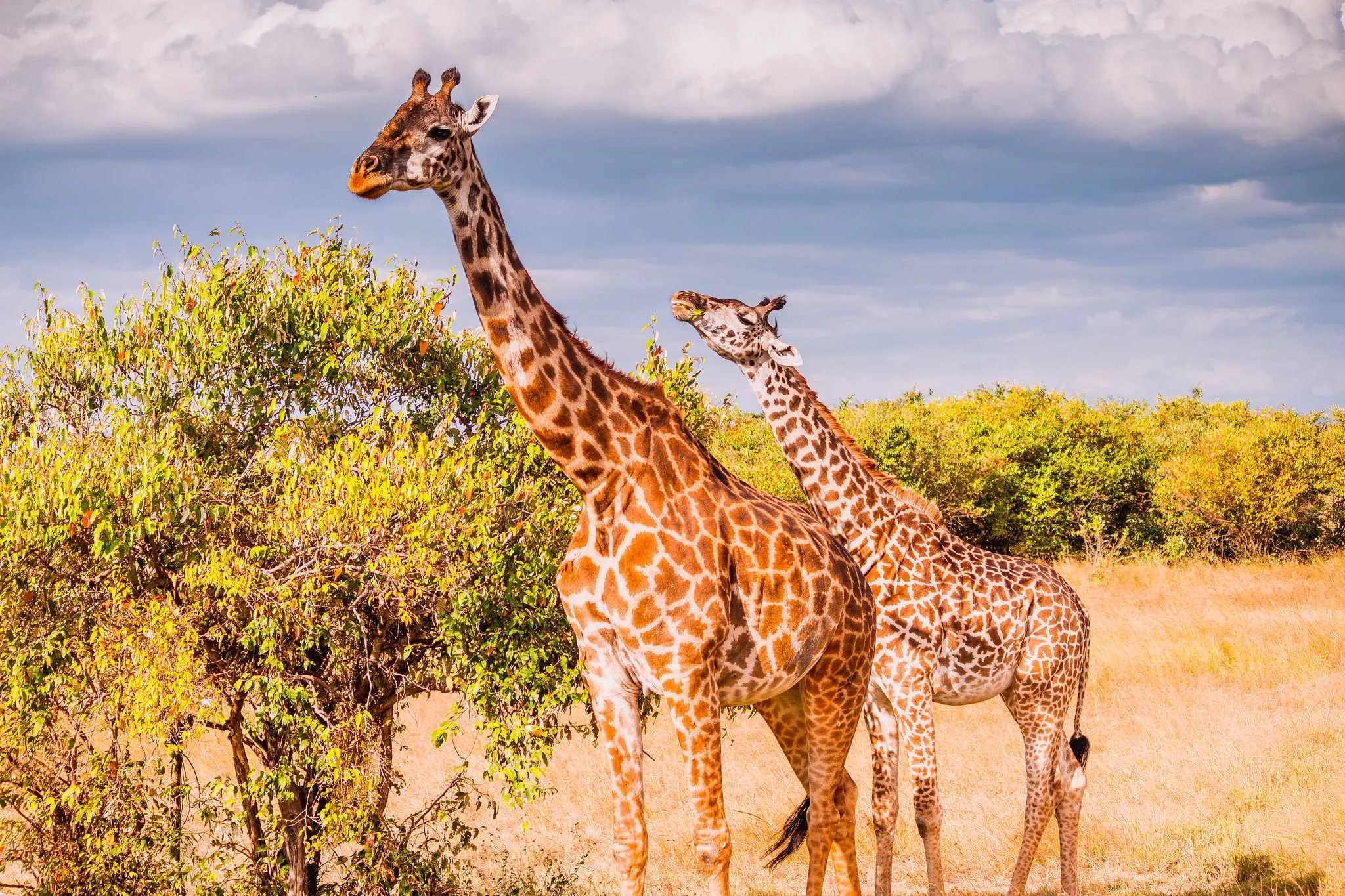
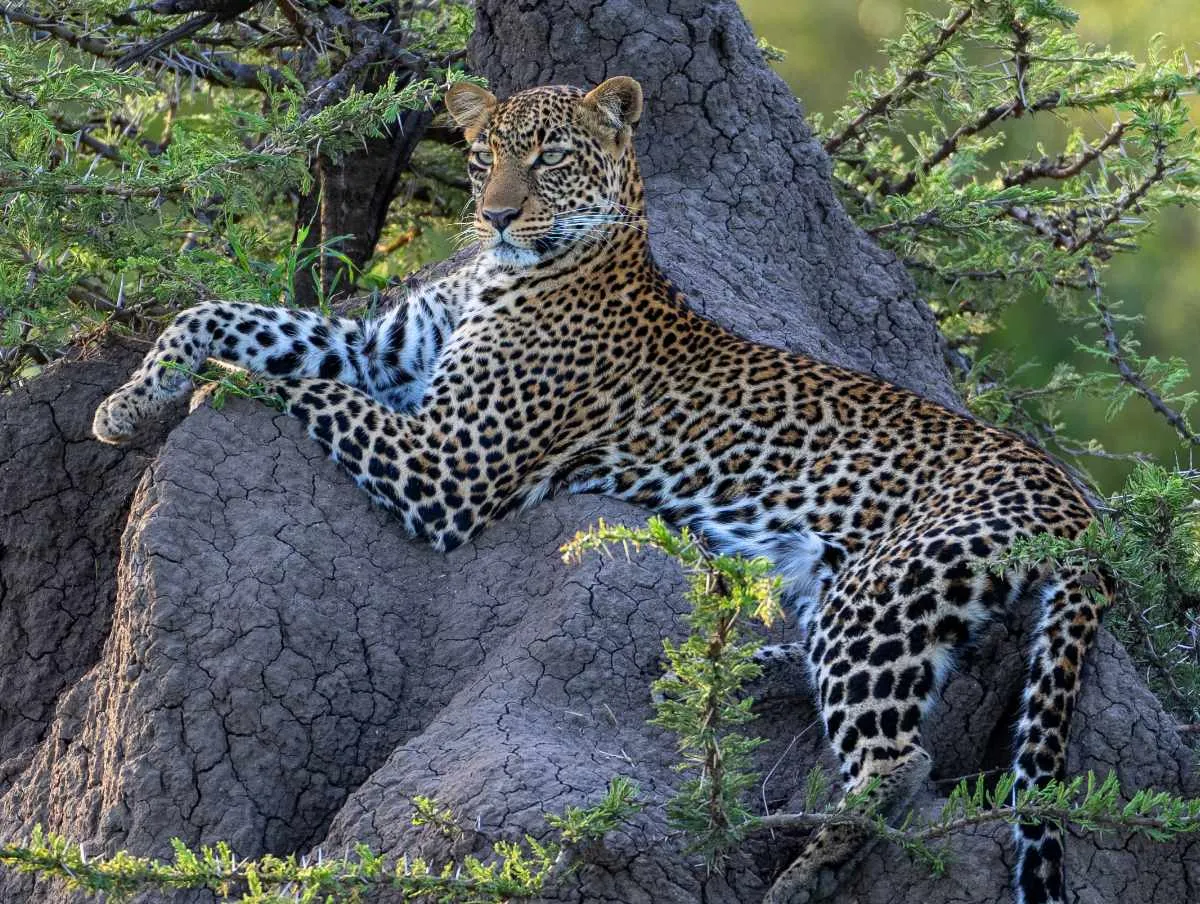
Tarangire has the full northern circuit cast: lion, leopard, cheetah, buffalo, giraffe, zebra, wildebeest, oryx, eland. Wild dogs are occasionally seen — rare anywhere, and always a significant sighting.
What Tarangire has that other parks don’t, or at least not in the same numbers, is Python — the African rock python is common here and regularly found in the fig trees along the river. Not everyone’s highlight, but worth knowing about.
The birdlife is exceptional. Over 500 species, including several that are difficult to find elsewhere on the northern circuit. The yellow-collared lovebird is endemic to this ecosystem. The Ruaha red-billed hornbill is here. The diversity of habitats — riverine forest, acacia woodland, open grassland, swamp — means the species list shifts dramatically between sections of the park. For serious birders, Tarangire deserves more time than most itineraries give it.
The Atmosphere
Tarangire has fewer visitors than the Serengeti or Ngorongoro. That gap has narrowed as the park has become better known, but it remains noticeably quieter — especially in the southern sections, which most day-trip itineraries don’t reach.
The light in Tarangire is particular. The dust, the baobabs, the warm tones of the dry season grass — at golden hour it produces the kind of images that photographers specifically plan trips around. If you shoot wildlife seriously, build in at least two full days here.
When to Go
June – October is the dry season and the best time for concentrated wildlife viewing around the river and swamp. July and August are peak, when the herds are largest and the predator activity is highest.
November – May brings the rains and a different kind of beauty. The park turns green almost overnight. Migratory birds arrive. The elephant herds disperse across a wider area as water becomes available everywhere, which makes them harder to find in large groups but more interesting to observe in the woodland. The green season visitor gets Tarangire largely to themselves.
November and December — the short rains — are worth considering. The grass is not yet too high, the light is dramatic with storm clouds building in the afternoons, and the park is quiet.
As Part of Your Safari
Tarangire is typically the first or last stop on the northern circuit, given its position near Arusha. One night is the minimum. Two nights is what actually does it justice — a full day in the southern section, including the Silale Swamp, is a different experience from the northern areas most day trips cover.
It pairs particularly well with Lake Manyara for a short safari, or as the opening act to a longer itinerary through Ngorongoro and the Serengeti.
We always include it when the timing works. It has never disappointed a guest.