Zanzibar Island | Jumbo Trails
Map of Zanzibar
Tap to enlarge map
Zanzibar
There’s a moment, usually on the second day, when Zanzibar stops feeling like a destination and starts feeling like somewhere you actually want to stay.
The light does it. The smell of cloves in the heat. The way Stone Town sounds at dusk — call to prayer, motorbikes, someone cooking fish somewhere close. The Indian Ocean sitting flat and impossibly blue at the end of a dirt road.
Zanzibar is not complicated. But it rewards people who slow down enough to actually feel it.
The Island
Zanzibar — locally called Unguja — sits 35 kilometres off the Tanzanian coast in the Indian Ocean. It’s roughly 85 kilometres long. Small enough to know in a week. Rich enough to keep surprising you.
For centuries it was one of the most strategically important islands in the world. Arab traders, Persian merchants, Portuguese navigators, Omani sultans, British colonists — they all came, stayed, and left their mark. What remains is a culture that belongs entirely to itself: Swahili, layered, proud, and quietly extraordinary.
The cloves, cinnamon, cardamom, and vanilla that once made this island worth fighting over still grow here. You can smell them from the road.
Stone Town
Stone Town is a UNESCO World Heritage Site, but don’t let that make it sound like a museum. It’s lived-in, loud in places, crumbling beautifully in others, and completely alive.
The carved wooden doors are the famous thing — hundreds of them, each one different, each one a statement about the family behind it. But the real Stone Town is in the lanes between them. The tea houses. The rooftop views. The market at Darajani where the fish and the fruit and the spices all compete for your attention at once.
Walk it without a map first. Then walk it with someone who grew up here.
The Old Fort, the House of Wonders, Forodhani Gardens at night — all worth your time. So is the Slave Monument, which is uncomfortable and important and should not be skipped.
Freddie Mercury was born here, in case that matters to you.
The Beaches
No two coastlines on Zanzibar are the same.
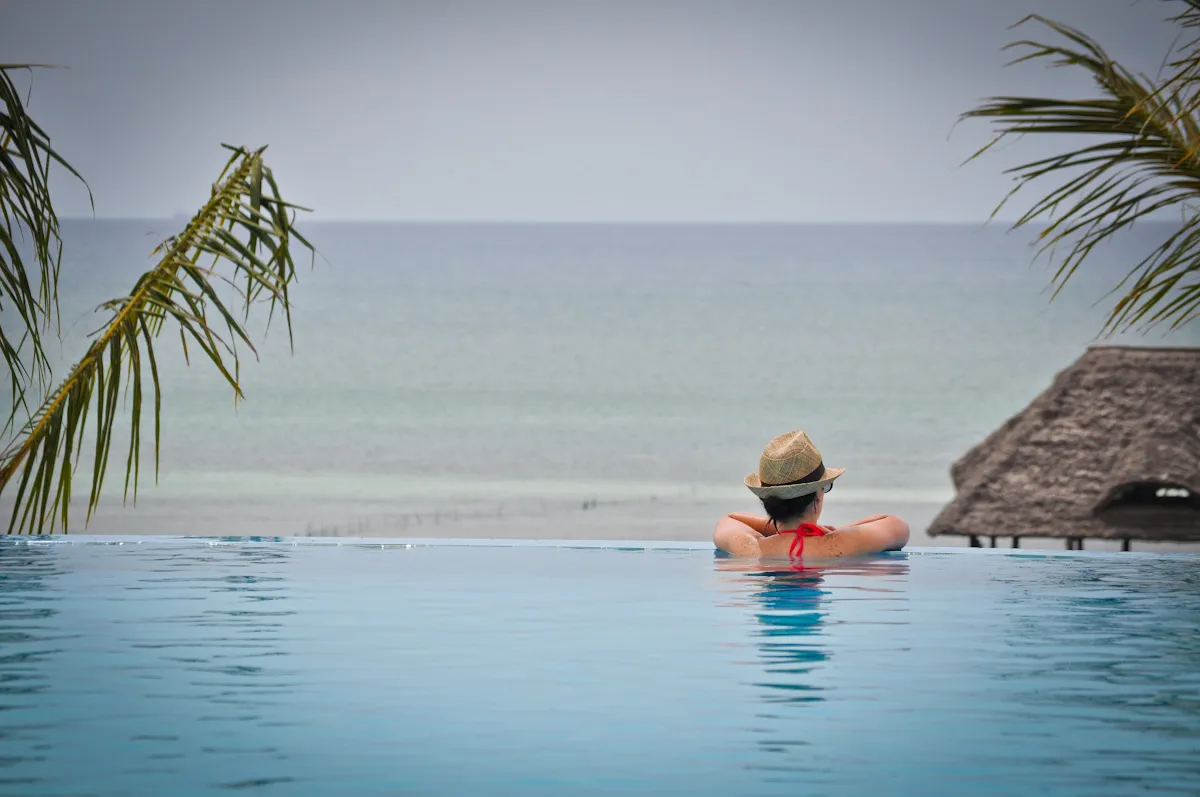
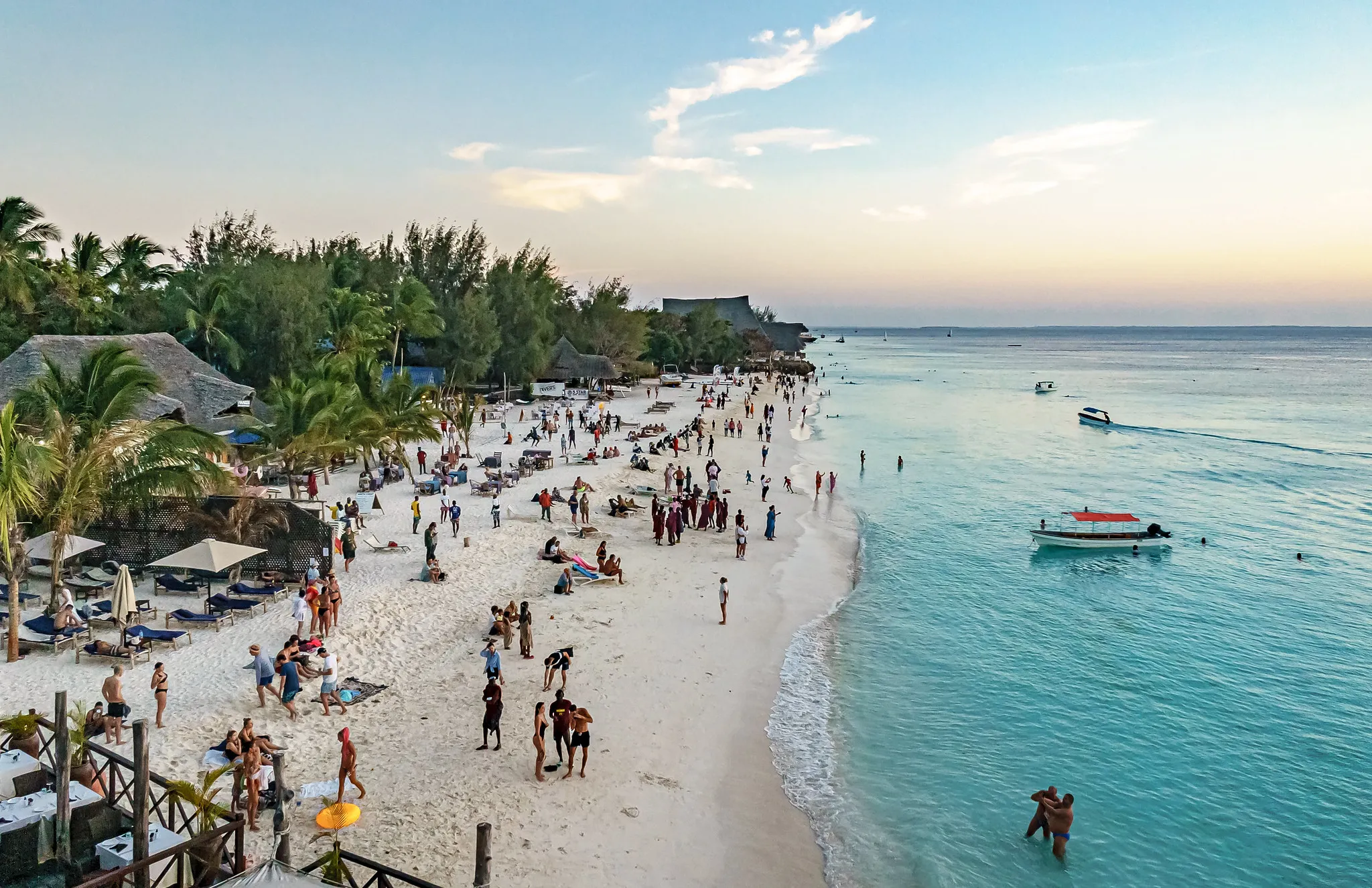
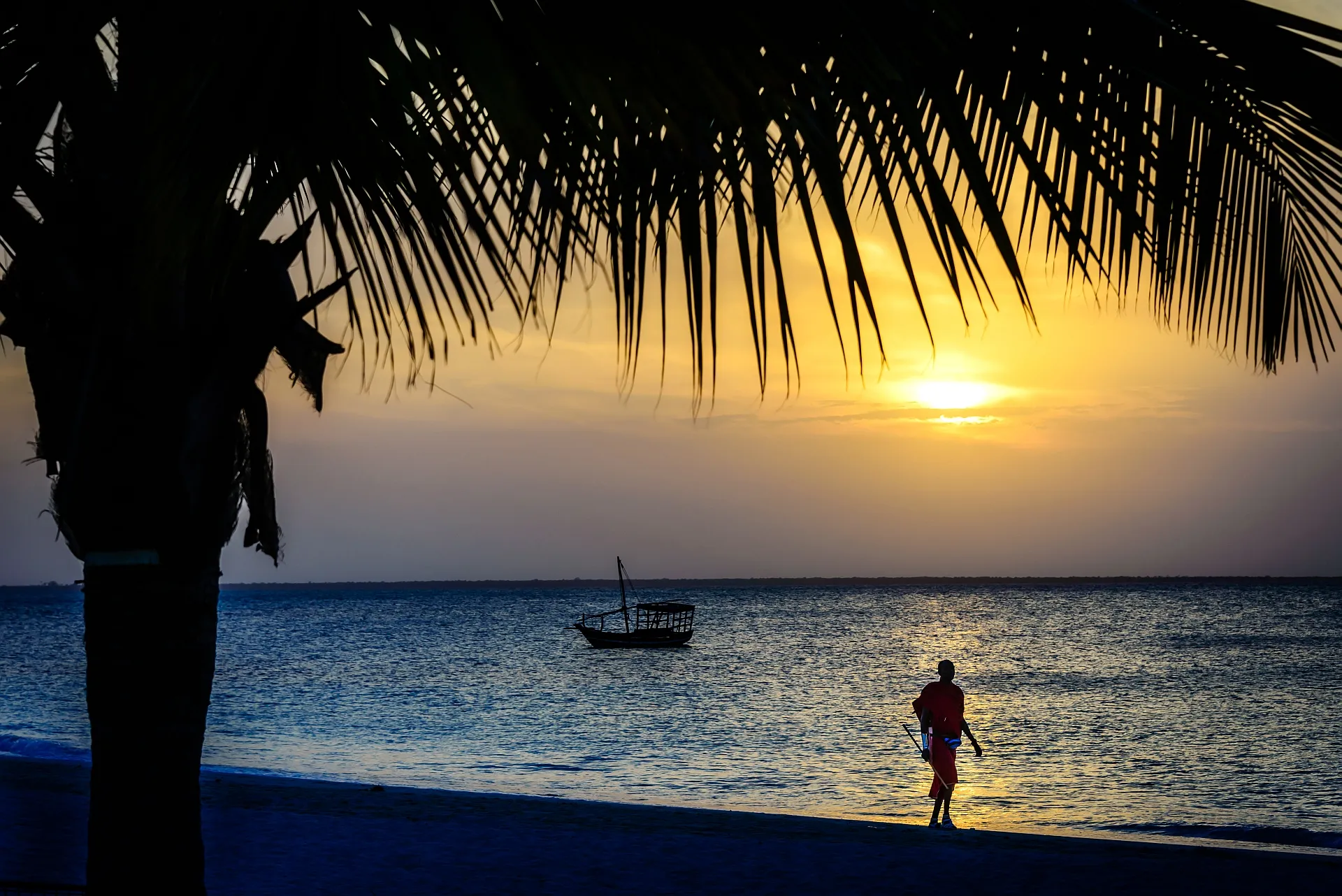
The north — Nungwi and Kendwa — has the most consistent swimming. The tides here are gentle, the water stays swimmable all day, and the sunsets over the open ocean are long and golden. It’s the most social part of the island — beach bars, dive schools, dhow trips leaving at dawn.
The east coast — Paje and Jambiani — is wilder. Huge tidal flats that turn the sea into a mirror at low tide. Kite surfers in the air from June through October. A more local, slower pace. The kind of beach where you eat grilled fish at a plastic table and it’s the best meal of the trip.
The northeast — Matemwe — is where you go when you want to disappear. Quiet, authentic, close to Mnemba Atoll. The reef just offshore is the best snorkeling on the island.
The southeast — Michamvi and Bwejuu — faces the sunrise. Long empty beaches, shallow warm water, almost no one around. Romantic in a way that doesn’t require effort.
The Water
The Indian Ocean around Zanzibar is exceptional. Warm, clear, and full of life.
Mnemba Atoll is the centrepiece — a protected marine sanctuary off the northeast tip of the island where green turtles, reef sharks, and walls of tropical fish are routine. Divers come from far away specifically for this. Snorkelers can access the outer reef.
Chumbe Island to the south is a coral sanctuary with strictly limited daily access. If you can get on it, do.
Dolphins gather off Kizimkazi most mornings. Humpback whales pass through between June and September. Whale sharks appear around Leven Bank for the serious divers.
The water here is not background. It’s the whole story.
The Interior
Most visitors stay near the coast. That’s a mistake, or at least an incomplete version of the island.
Jozani Forest in the south is the only national park on Zanzibar and home to the Red Colobus monkey — an animal that exists nowhere else on earth. The forest is dense, green, and quiet in the early morning. The mangrove boardwalk on the south side of the park gets almost no visitors and has extraordinary light.
The spice farms in the central highlands are where cloves, vanilla, cinnamon, turmeric, and lemongrass grow alongside jackfruit and coconut. A proper spice tour — with a guide who actually knows the land — is one of those experiences that seems minor and stays with you.
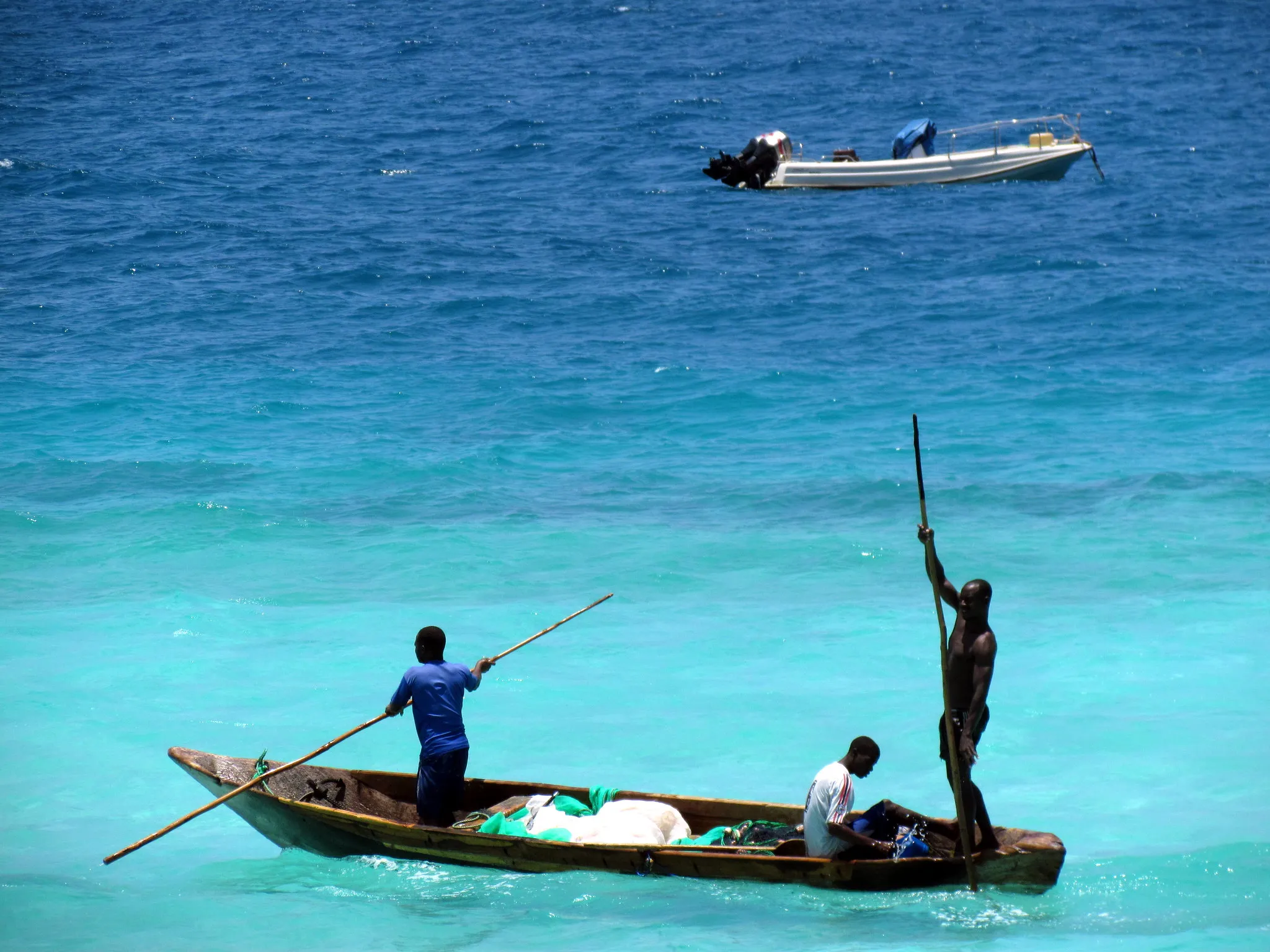
The villages of the east coast are worth time too. Jambiani and Matemwe in the morning, when the seaweed farmers are working the tidal flats and the fishing boats are coming in. That’s the real island.
When to Go
Zanzibar has two rainy seasons — the long rains from April through May, and shorter rains in November. Outside of those windows, the island is good.
June through October is peak season on the east coast — the trade winds make it the best kite surfing in the region, but the ocean is rougher for swimming. The north coast is calmer year-round.
December through March is warm, dry, and ideal. The water is at its best for diving and snorkeling. This is when we’d go.
How to Get There
Most visitors fly into Zanzibar from Dar es Salaam or Kilimanjaro International Airport. The flight from Kilimanjaro takes about an hour. From Dar es Salaam, 20 minutes.
There’s also a ferry from Dar es Salaam — two hours on a good day, rough when the sea is up. The flight is worth it.
If you’re combining Zanzibar with a mainland safari, we handle all the connections. One booking, no coordination headaches on your end.
Combine It With Your Safari
Three to five days in Zanzibar after a safari is close to a perfect trip structure. The bush is intense — early mornings, long drives, constant alertness. Zanzibar is the exhale. White sand, warm water, cold drinks, no agenda.
Some people prefer to start in Zanzibar and end on the mainland. Both work. We’ll tell you which makes more sense for your specific trip.
We plan the full journey — internal flights, transfers, accommodation, excursions. You arrive, we handle the rest.
Start planning your Zanzibar trip →
Just Zanzibar
You don’t need a safari to come here. A week on the island — Stone Town, beaches, water, good food — is a complete trip on its own terms.
We plan Zanzibar-only itineraries with the same care as everything else we do. No package shortcuts, no standard itineraries handed down from a shelf.
Tell us what you have in mind →