Ngorongoro Crater & Conservation Area
Map of Ngorongoro
Tap to enlarge map
Ngorongoro Crater & Conservation Area
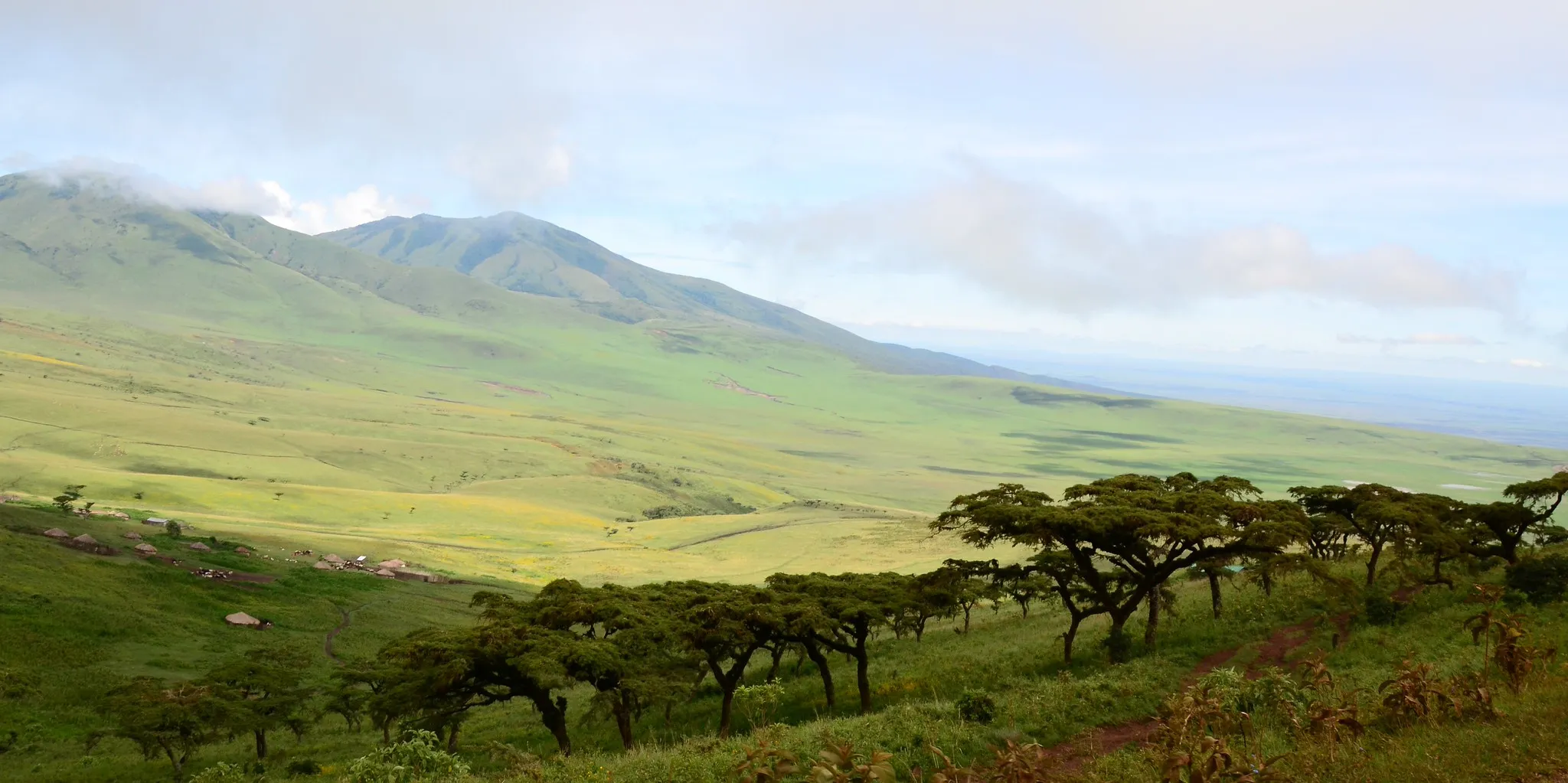
About three million years ago, a massive volcano collapsed in on itself. What it left behind was a caldera roughly 20 kilometres across and 600 metres deep — walls rising on all sides, a flat fertile floor below, and a closed ecosystem that has been filling with wildlife ever since.
The Ngorongoro Crater is the largest intact volcanic caldera on earth. It is also one of the finest places on the African continent to see the Big Five in a single day.
The Crater
The floor of the crater covers about 260 square kilometres. It holds grassland, acacia woodland, a soda lake, marshes, and a freshwater stream — enough habitat variety to support a permanent population of around 25,000 large animals that rarely need to leave.
Lions here are different from lions elsewhere. The crater population has been relatively isolated for generations, and the males have developed notably dark, full manes. They are unhurried, territorial, and very visible on the open floor.
Black rhino are critically endangered across Africa. Ngorongoro is one of the last places where you have a genuine chance of seeing them in the wild. The population is small and protected, and sightings are never guaranteed — but they happen here when almost nowhere else in Tanzania can say the same.
Elephant bulls descend into the crater, drawn by the minerite-rich soil. The herds stay mostly on the rim. What you see on the floor are large solitary males — older, heavier, tusks worn and yellowed. Impressive in a different way from the family groups of Tarangire.
The hippo pool at the Mandusi swamp is one of the most reliable wildlife stops on the northern circuit. Dozens of hippos, year-round, at close range.
The Maasai
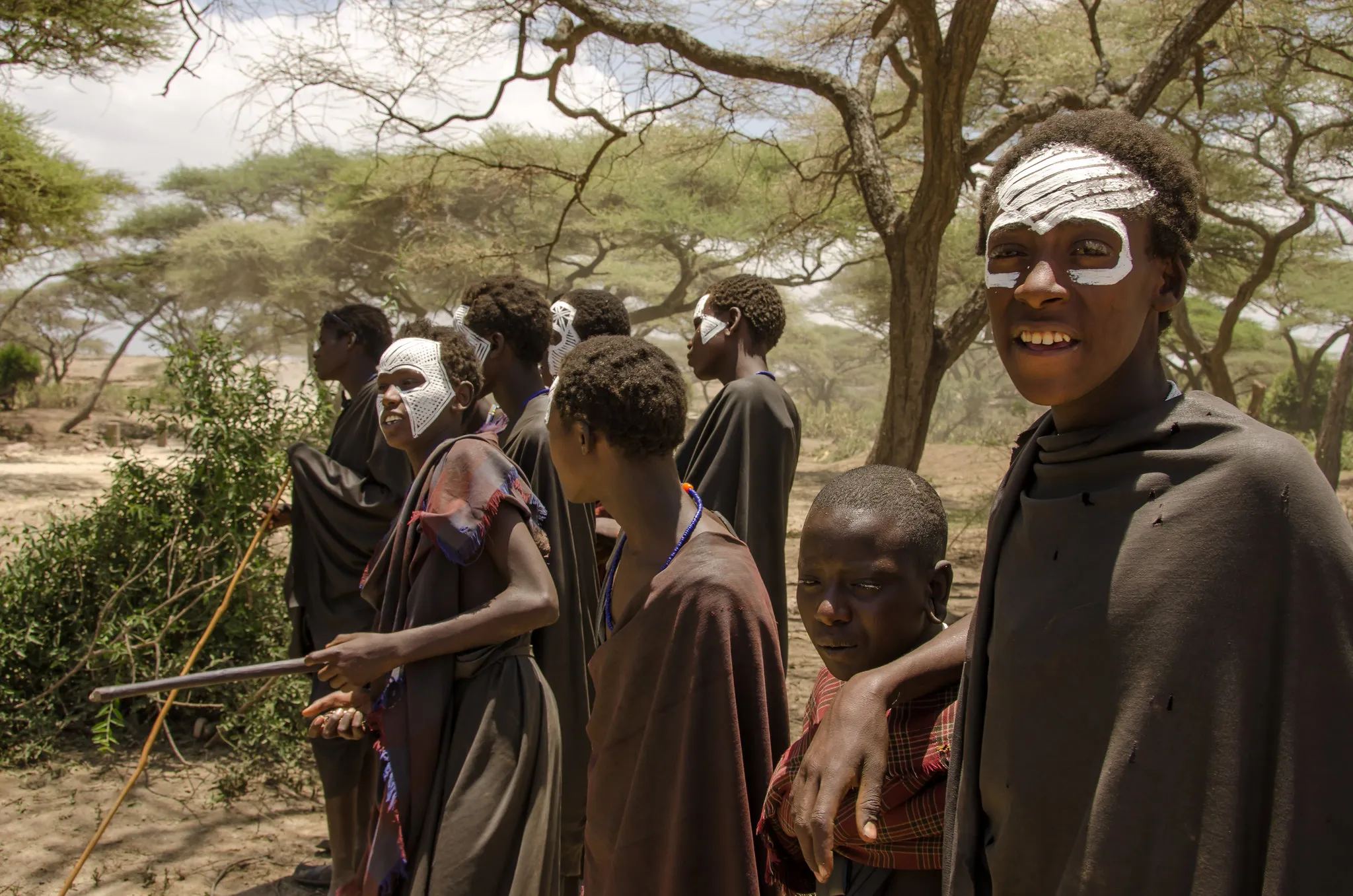
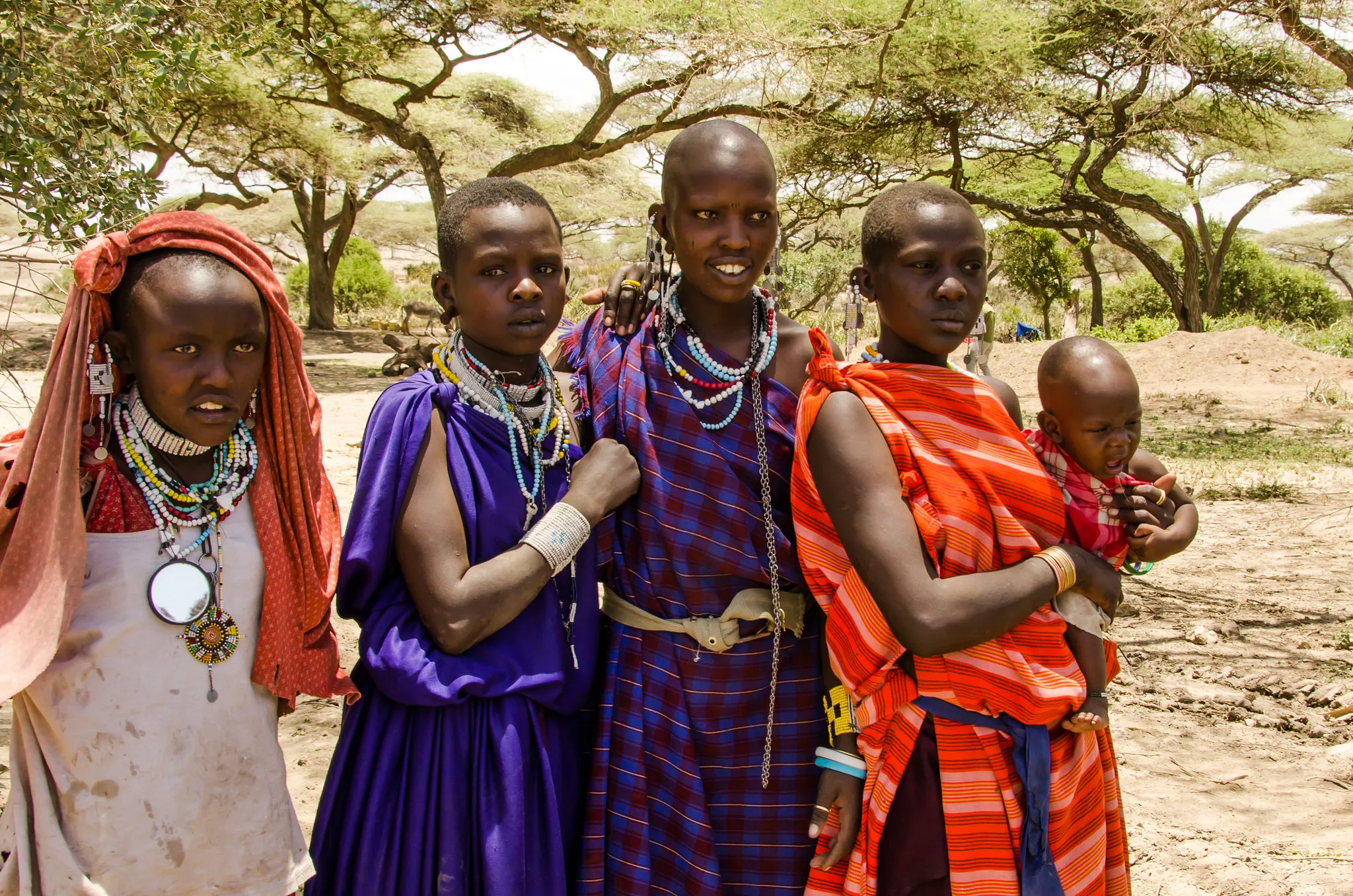
Ngorongoro is not a national park. It is a Conservation Area — a designation that exists specifically to allow the Maasai to continue living and grazing their cattle within its boundaries, as they have for centuries.
On the crater rim and across the wider conservation area you will see Maasai homesteads, cattle moving through the morning mist, warriors in red shukas against an acacia skyline. This is not performance. It is daily life, unchanged in its essentials despite the tourist infrastructure around it.
The relationship between the Maasai and this land predates the conservation area, predates the colonial borders, and will likely outlast both. That context matters when you visit.
A respectful visit to a Maasai boma — ideally arranged through a community-connected guide rather than a roadside stop — is one of the more genuine cultural experiences available on the northern circuit.

The Wildlife
The crater floor holds the Big Five. That statement is rarer than it sounds — very few places in Africa can say it reliably.
Lion and hyena are the dominant predators and their competition is constant and visible. The crater has one of the highest hyena densities in Africa, and the spotted hyena here are active hunters, not just scavengers. Watching a clan work together on the open floor is a different experience from anything you get in the Serengeti.
Leopard are present but elusive — the forested sections of the crater wall are their territory. Cheetah are rare on the floor but occasionally seen.
The birdlife is exceptional. Lake Magadi in the crater floor turns pink with flamingos in certain seasons. Crowned cranes, kori bustards, secretary birds, and a full cast of raptors work the grassland. Over 500 species recorded across the conservation area.
Beyond the Crater
The conservation area covers 8,000 square kilometres. Most visitors see only the crater floor, which means most visitors miss the wider landscape entirely.
Olduvai Gorge sits in the western part of the NCA, between Ngorongoro and the Serengeti. This is where Louis and Mary Leakey found some of the earliest evidence of human existence — fossils and tools dating back nearly two million years. The small museum is worth the stop. Standing at the edge of the gorge knowing what was found in the layers below has a particular weight to it.
The crater rim at dawn, before the descent, is one of the great viewpoints in East Africa. Cloud often fills the caldera in the early morning and then burns off as the sun rises, revealing the floor below by degrees. If your lodge is on the rim, get up early.
The Empakaai and Olmoti craters further north in the NCA are smaller, less visited, and accessible by foot with a ranger. Empakaai holds a deep crater lake. Almost nobody goes. Highly recommended if you have an extra day.
Practical Notes
The crater descent is via a single steep road shared by ascending and descending vehicles. You enter in the morning and must exit by late afternoon — no overnight stays on the floor. This means the crater is busier mid-morning when everyone is down at the same time. Early descent, before 7am, gives you the floor almost to yourself.
Ngorongoro sits at around 2,300 metres on the rim. It is cold at night and cool in the mornings, even in the dry season. Pack a layer you didn’t think you’d need.
Vehicle numbers on the crater floor are limited by permit, but in peak season it can still feel busy at the lion sightings. A good guide knows which parts of the floor to avoid when the convoy effect kicks in.
As Part of a Safari
Ngorongoro fits naturally into the northern circuit alongside Tarangire, Lake Manyara, and the Serengeti. Two nights on the rim — one full day in the crater, one morning before driving to Serengeti — is the minimum that does it justice.
The crater alone, combined with a few days in the Serengeti, is a complete and very strong short safari. If you have five days in Tanzania and want the best return on that time, this combination is what we’d recommend.