Getting Around Tanzania: Airports, Roads, Ferries, and Everything In Between
Getting Around Tanzania
Tanzania is a big country — nearly four times the size of Germany — and how you get from A to B will shape your trip more than most people expect. Here’s what you need to know.
Airports
Tanzania has three airports that actually matter for international and safari travel.
Julius Nyerere International Airport (DAR) — Dar es Salaam. The main hub. Handles the most international traffic, including connections to Nairobi, Addis Ababa, Dubai, Amsterdam, Moskow and beyond. The airport is functional but often chaotic. Arrivals can be slow; allow 60–90 minutes for immigration if you’re arriving on a busy evening flight. Departures are generally smoother. The new Terminal 3 handles most international traffic and is a significant upgrade from what came before.
Kilimanjaro International Airport (JRO) — Between Arusha and Moshi. The gateway for the northern circuit: Serengeti, Ngorongoro, Tarangire, Amboseli (if crossing into Kenya). Most safari visitors fly into JRO. It’s smaller, more manageable, and less stressful than DAR. Direct flights from Amsterdam (KLM), London (Condor), and several other European cities. If your trip starts in Arusha, fly here.
Abeid Amani Karume International Airport (ZNZ) — Zanzibar. Handles direct charter flights from Europe during peak season and connects daily to Dar, Nairobi, and a handful of regional destinations. The island has its own immigration process — you’ll clear passport control even arriving from mainland Tanzania.
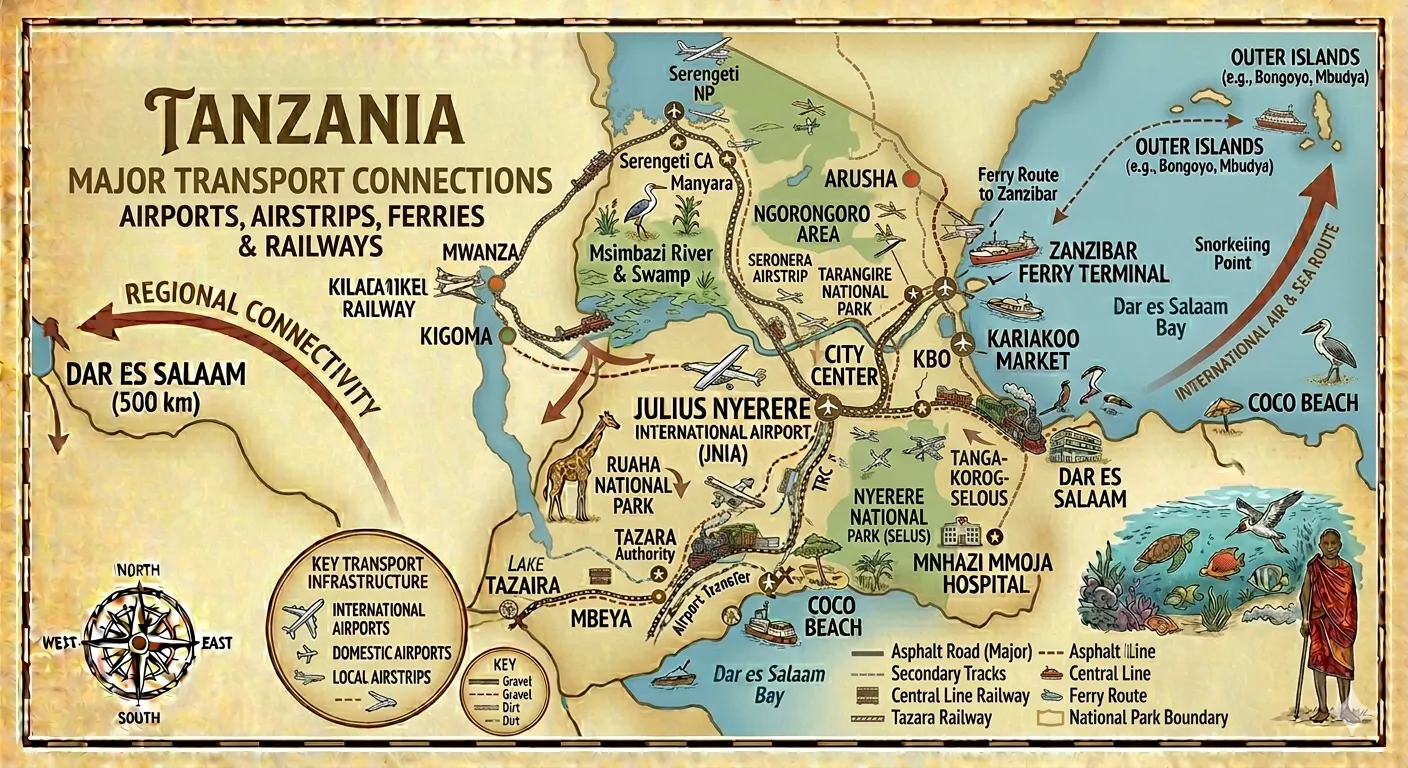
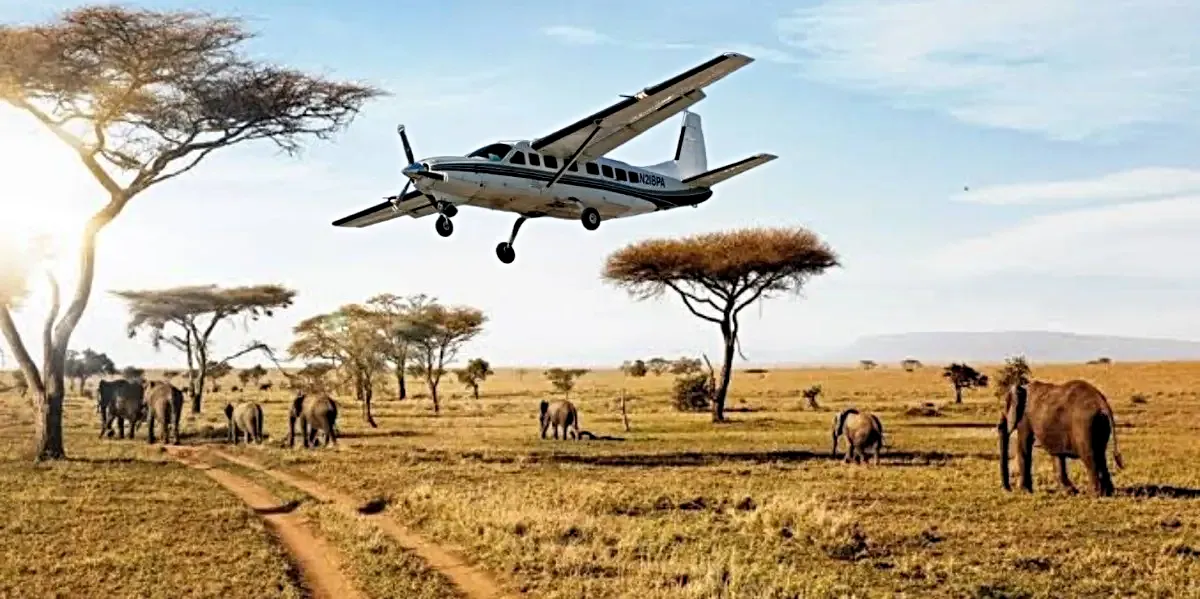
Smaller strips to know: Seronera (in the central Serengeti), Grumeti, Lake Manyara, Ruaha, Selous/Nyerere — these are charter/bush airstrip operations. Coastal Aviation, Auric Air, Air Excel, and Tropical Air run most scheduled and charter traffic between them. Planes are small (Cessna Caravans, Grand Caravans), weight limits are strict, and “schedules” are loosely interpreted. Build buffer days before international departures.
Internal Flights
Flying between parks and islands is common and often the right call. Dar to Zanzibar is a 20-minute flight; the ferry takes 2 hours and is uncomfortable in rough weather. Arusha to Selous (Nyerere) is 90 minutes by air vs. a full day overland.
Practical notes:
- Book early in peak season (July–October, December–January). Seats sell out.
- Baggage is typically 15kg soft-bag only on bush planes. Hard-sided luggage will not fit. This is not flexible.
- Delays happen. A morning flight can slip by hours. Factor this into airport connections.
Roads
Tanzania’s road network ranges from excellent to genuinely terrible, depending on where you are.
Tarmac roads connect major towns: Dar es Salaam to Arusha (the A104, around 8 hours), Arusha to Moshi (1.5 hours), Dar to Dodoma (4–5 hours). These are driveable in a normal car.
Park roads and bush tracks are unpaved, often corrugated, and can become impassable after heavy rain. A 4WD safari vehicle is not optional — it’s the only sensible choice. Distances on a map are deceptive. 80km in the Selous can take 3–4 hours.
The Serengeti crossing (entering through the western Lobo or using the Mara bridge route north) involves serious dirt roads. Some lodge transfers can take all day. Know this before you book.
Self-driving in Tanzania: Technically possible. In practice, not recommended unless you’re experienced with African off-road driving, carry a spare tyre (plural, ideally), have a sat-phone or Spot device, and understand that getting stuck in a remote area means waiting for another vehicle. Safari operators use local drivers for a reason.
Taxis and Ride-Hailing
Bolt is the dominant app in Dar es Salaam, Arusha, Zanzibar, and other cities. Use it. It fixes the price in advance and eliminates negotiation. It works reliably in urban areas.
White taxis (the older meter-free option) are fine for airport runs if you agree the price before you get in. Never agree to “we’ll sort it at the end.” Always set the price upfront in cash, and know roughly what it should cost before you ask.
Bajaji (auto-rickshaws) are common in Zanzibar Stone Town and secondary towns. Cheap, slow, good for short hops. Not suitable for luggage-heavy transfers.
Do’s:
- Use Bolt whenever you have data.
- Agree price before entering any non-app taxi.
- Don’t share taxis with strangers unless you know them.
Don’ts:
- Don’t take unsolicited offers of rides outside airports or bus stations. The “helpful local” at the kerb often has a deal with a driver that benefits no one but them.
- Don’t expect metered taxis to use their meters.
Buses
DAR Express, Kilimanjaro Express, Royal Coach — these are the reputable intercity coach operators. Comfortable, air-conditioned, reasonably on time. Dar to Arusha costs around $15–25 depending on class. Book in advance, especially for morning departures.
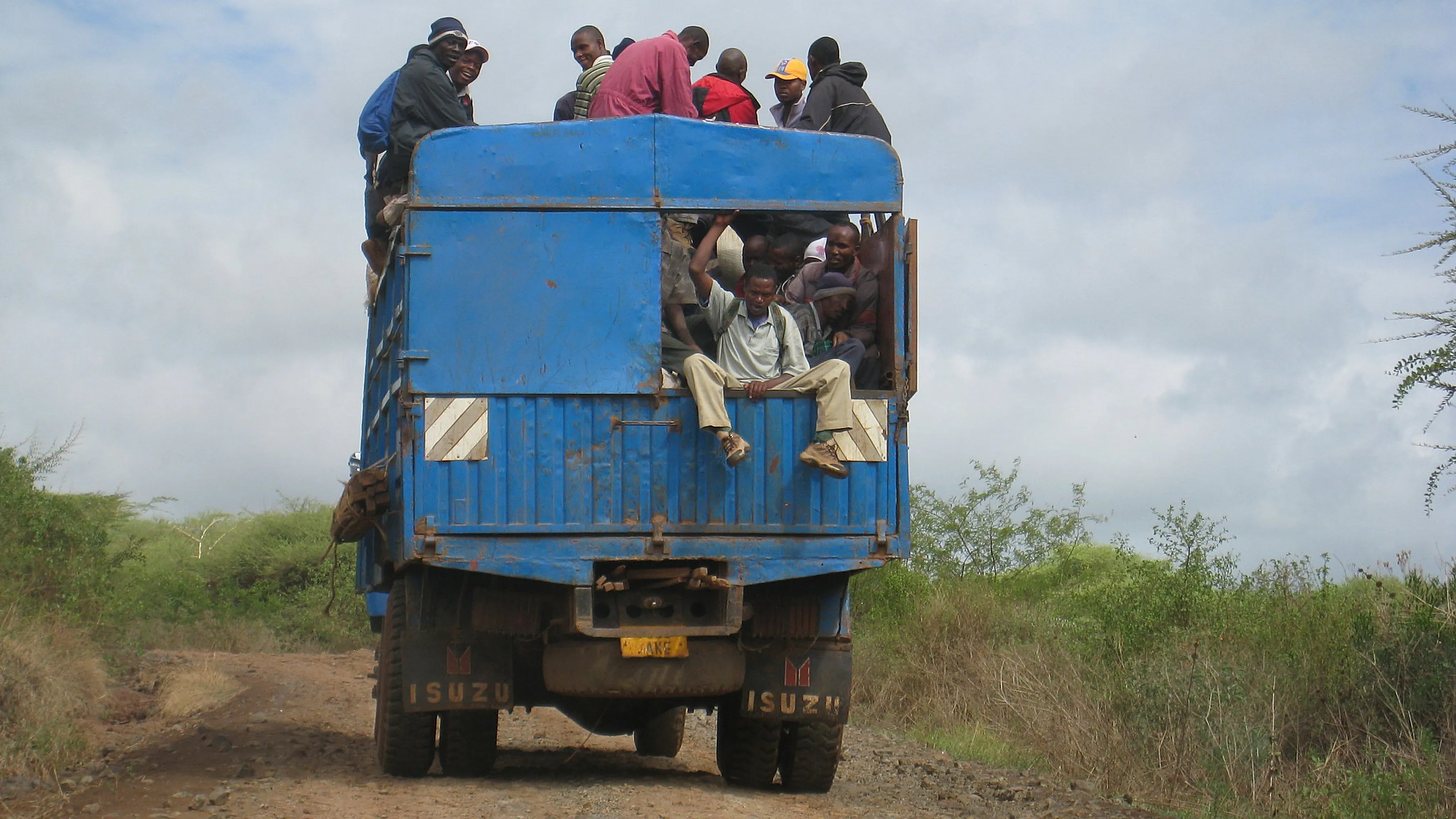
Dala dalas — the minibuses that handle local routes within cities and between towns. Extremely cheap. Invariably overcrowded. Luggage strapped to the roof or wedged in impossibly. Fine for budget short hops, genuinely miserable for longer distances with gear.
Practicalities:
- Intercity bus stations in Dar es Salaam (Ubungo) are chaotic. Arrive early. Guard your belongings.
- Journeys take longer than Google Maps suggests. Tanzania’s roads respect no algorithm.
- Night buses exist. Avoid them. Road safety after dark in rural Tanzania is not the same calculation as in Europe.
Ferries
Dar es Salaam to Zanzibar — The main crossing. Operated primarily by Azam Marine and Fast Ferries. Journey time: 90 minutes (fast) to 2 hours. Cost: $35–40 one way for foreigners. Ferries run multiple times daily, morning and afternoon departures being the main slots.
Book in advance in peak season. Turning up at the port and expecting a ticket is possible but stressful. Buy online or through your operator.
Sea conditions: The channel between the mainland and Zanzibar can be rough, particularly during the short rains (October–November) and in the afternoon as the wind picks up. If you’re prone to seasickness, take something before boarding. The lower decks are more stable; the upper decks feel every wave.
Dar to Pemba: Slower, less frequent, longer crossing. Not something most visitors do.
Lake ferries: The MV Liemba on Lake Tanganyika (Kigoma area) is iconic but operates irregularly. Don’t plan a tight itinerary around it.
Port in Dar: The terminal is at Kivukoni. It’s a 15–20 minute drive from the city centre depending on traffic. Dar’s traffic is in a category of its own — always leave buffer time.
Trains
TAZARA (Tanzania-Zambia Railway): Runs from Dar es Salaam through Selous (Mbamba Bay and Makambako) to Kapiri Mposhi in Zambia. Twice weekly express, once weekly slow. Truly spectacular scenery through the Selous buffer zone. First class sleepers are functional. A journey experience in itself — not a fast way to move but memorable if you have time.
SGR (Standard Gauge Railway): Tanzania’s new Dar to Dodoma line is operational as of recent years. The Dar–Morogoro and Morogoro–Dodoma sections are running. Extensions toward Tabora and Mwanza are under construction. It’s modern, fast, air-conditioned, and cheap by any standard. Not directly useful for most safari itineraries yet, but watch this space.
Central Line (Meter Gauge): The old colonial-era line from Dar to Kigoma and Mwanza. Slow, unreliable, scenic in parts. Not recommended for time-sensitive travel.
General Do’s and Don’ts
Do:
- Carry some cash (Tanzanian shillings) at all times. Smaller towns, parks, and markets don’t do cards.
- Get a local SIM card (Vodacom, Airtel, or Halotel). Data is cheap. Having a working phone number solves countless problems.
- Confirm all transfers and pickups the day before.
- Tell your operator or accommodation if your flight is delayed. People will wait — but they need to know.
- Dress modestly outside tourist areas, especially on Zanzibar. Shoulders and knees covered in Stone Town is a baseline respectful minimum.
Don’t:
- Photograph people, military installations, government buildings, or ports without permission. This is taken seriously.
- Assume “just around the corner” means what it does in Amsterdam.
- Drink tap water. Bottled or filtered only.
- Leave airport transfers to chance on the day of international departure. Traffic in Dar can add 90 minutes to any journey without warning.
- Exchange money with street changers. Banks and licensed forex bureaux only.
A Word on Timing
Tanzania’s transport network is improving rapidly but it runs on African time, which is to say: schedules are aspirational, not contractual. Build slack into your itinerary — especially around domestic flights and before international departures. The safaris and the landscape reward patience. Getting stressed about a 45-minute bus delay is wasted energy.
Plan well, stay flexible, and you’ll move through this country without drama.