Tanzania & Zanzibar: Understand the Climate Before You Book
Two destinations. One country. Very different weather patterns. Here’s what you actually need to know.
Tanzania confuses people when it comes to weather. Ask ten people when to go and you’ll get ten different answers - because they visited different regions, in different years, with different expectations. Add Zanzibar to the mix and the confusion doubles.
This guide cuts through it. Tanzania’s climate is not complicated once you understand the basic structure. And knowing it will directly affect when you book, where you go, and what you experience.
The Big Picture
Tanzania sits just south of the equator. That matters because it means two things:
Temperatures are broadly stable year-round. Unlike Europe or North America, you’re not dealing with dramatic seasonal swings. On the northern safari circuit, daytime temperatures typically range from 25°C to 35°C. Mornings and evenings can be cool - especially at altitude in Ngorongoro (down to 5°C at night) or on Kilimanjaro approaches.
What changes is rain, not heat. Tanzania’s seasons are defined by wet and dry periods, not by temperature. This is the key to understanding the calendar.
Mainland Tanzania: Two Rain Seasons
Tanzania has two distinct rainy seasons driven by the Inter-Tropical Convergence Zone - a band of low pressure that moves north and south with the sun.
The Long Rains - Masika
Mid-March through May.
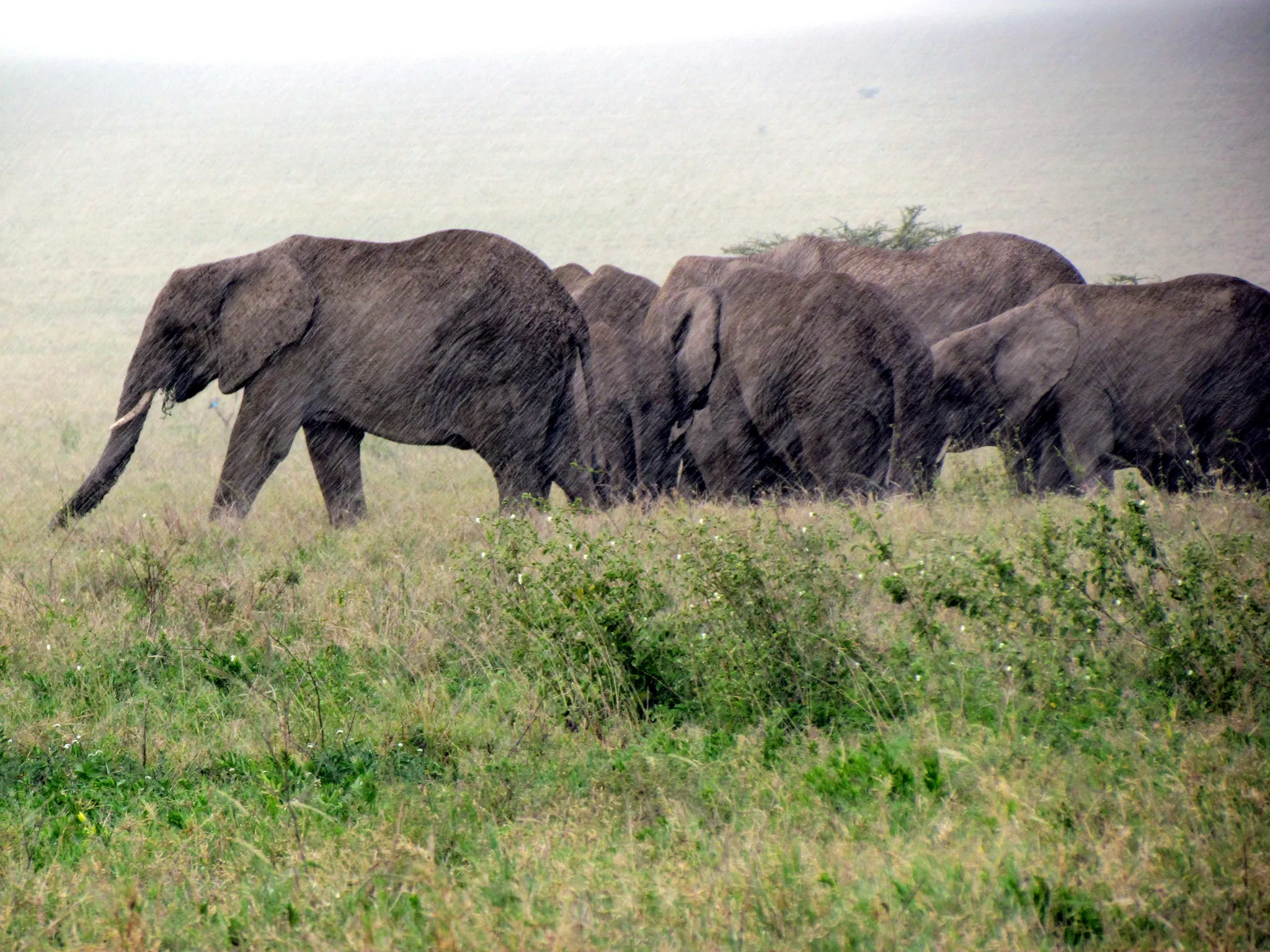
The most significant rainy period of the year. Rainfall can be heavy and sustained, particularly in April and May. Roads in remote areas become difficult. Some camps and lodges close. Visitor numbers drop sharply.
This is not, however, the apocalyptic rain event it’s sometimes made out to be. It typically rains in the afternoons or overnight. Mornings are often clear. The landscape turns intensely green and the birding becomes exceptional.
The Short Rains - Mvuli
October through December.
Shorter, lighter, and less predictable than the long rains. Often arrives as afternoon thunderstorms that clear quickly. The short rains rarely disrupt a safari in the way the long rains can. October in particular is a good month - the rains are gentle, the landscape is beginning to green up, and visitor numbers are lower than peak season.
The Dry Seasons
January – mid-March: Warm and largely dry. The southern Serengeti plains are active with calving. Excellent visibility. This is genuinely one of the best times to visit, and it’s underbooked relative to its quality.
June – September: The main dry season. Vegetation thins out, animals concentrate around water, and game viewing is at its most reliable. The Serengeti’s northern river crossings happen here. This is peak season - and peak pricing.
Regional Differences on the Mainland
Tanzania is a large, topographically varied country. Climate shifts significantly between regions.
Northern Circuit (Serengeti, Ngorongoro, Tarangire, Lake Manyara)
The most visited safari region. Generally follows the two-rain-season pattern above. Ngorongoro sits at altitude (2,300m on the crater rim) - it can be cold and misty in the mornings year-round. Always bring a warm layer for crater descents regardless of month.
Tarangire in the south of the northern circuit stays relatively dry even when the rest of the north is wet. The Tarangire River acts as a wildlife magnet in the dry season - elephant concentrations here in July through October are among the best in Africa.
Southern Circuit (Ruaha, Selous / Nyerere)
The southern parks follow a single, longer rainy season from November through April. The dry season runs May through October and is the only realistic window for visiting. These parks are less visited, wilder in character, and offer a meaningfully different experience from the northern circuit.
Ruaha in particular has a drier, semi-arid character. It rarely feels lush even in green season. The heat is more intense than the north - mid-30s to low 40s in October.
The Highlands and Kilimanjaro Region
The slopes of Kilimanjaro and the surrounding highlands receive higher rainfall and have more complex microclimates. The best climbing windows for Kilimanjaro are January–March and June–October - coinciding with the dry seasons. December and March/April are the most challenging months due to rainfall on the mountain.
Zanzibar: A Different Climate Logic
Zanzibar sits in the Indian Ocean, 35km off the Tanzanian coast. Its climate is shaped by oceanic conditions and monsoon patterns - and it does not line up neatly with the mainland.
This is the mistake many people make: they book a Tanzania mainland safari in April (manageable, if not ideal) and then add Zanzibar - not realising that April is one of the wettest months of the year on the island.
Zanzibar’s Rain Pattern
Long rains: April – May. Heavier and more persistent than the mainland equivalent. This is the low season on the island. Some smaller guesthouses close. Humidity is high. The sea can be rough.
Short rains: November – mid-December. Shorter and patchier. The island remains very much open and visited during this period. November can be hit or miss - some years the rains are light, some years they’re not.
Dry seasons:
- June – October is the main dry season. The southeast trade wind (Kusi) blows in from the Indian Ocean - it keeps temperatures comfortable (25–28°C) but can make the east coast choppy for swimming. The west coast is calmer during this period.
- December – March is the second dry window and arguably the most pleasant. The northeast monsoon (Kasikazi) brings warm, settled conditions. Sea temperatures are ideal. Both coasts are swimmable. This is when the island is at its best.
Zanzibar Water and Wind by Coast
| Period | East Coast | West Coast |
|---|---|---|
| Dec – Mar (Kasikazi) | Calm, excellent | Calm, excellent |
| Apr – May (long rains) | Rough, wet | Rough, wet |
| Jun – Oct (Kusi) | Choppy, windy | Calm, good |
| Nov – Dec (short rains) | Variable | Variable |
This matters if you’re choosing where to stay on the island. If you’re visiting in July, the east coast beaches at Paje or Bwejuu can be windswept. Nungwi or Kendwa on the north tip tend to be calmer.
Zanzibar Temperatures
The island is hot year-round - typically 27–32°C in the dry season, higher humidity in the rainy months. There is no cold season. The difference between months is humidity and rain, not temperature.
Combining Mainland and Zanzibar: Timing It Right
This is the most common Tanzania trip structure - safari on the mainland followed by a beach extension in Zanzibar. Getting the timing right matters.
Best combined windows:
January – February: Excellent calving season on the southern Serengeti plains, then into Zanzibar during its best dry period. Strong combination. Warm, settled, excellent conditions on both sides.
June – July: Dry season on the mainland, good Zanzibar west coast conditions. The east coast of Zanzibar can be choppy in June/July - choose your beach location accordingly.
September – October: Dry season wrapping up on the mainland, Zanzibar transitioning out of its best period but still largely good. October short rains on the island are patchy.
Combinations to approach carefully:
April – May: Manageable on the mainland with the right expectations, but Zanzibar’s long rains make a beach extension genuinely problematic. If your heart is set on Zanzibar, shift to a different month.
November: Unpredictable on both sides. The short rains can be fine or heavy. Fine as a budget option; risky if you have specific expectations.
Altitude and the Temperature Variable
One aspect of Tanzanian climate that surprises visitors is the role of altitude.
- Ngorongoro Crater rim (2,300m): Cold nights year-round. Bring a fleece and a windproof layer. Mist frequently sits over the crater in the mornings.
- Kilimanjaro summit (5,895m): Sub-zero temperatures, snow, and wind at the peak regardless of season.
- Arusha (1,400m): Pleasantly cool and green. Mornings can feel almost cold compared to the coast.
- Dar es Salaam coast (sea level): Hot and humid year-round, particularly November through March.
The One-Line Summary for Each Month
| Month | Mainland Safari | Zanzibar |
|---|---|---|
| January | ✅ Excellent - calving, dry, warm | ✅ Best season |
| February | ✅ Excellent - peak calving | ✅ Best season |
| March | ⚠️ Rains beginning | ⚠️ Rains beginning |
| April | ⚠️ Long rains - low season | ❌ Long rains - avoid |
| May | ⚠️ Long rains - low season | ❌ Long rains - avoid |
| June | ✅ Good - dry season begins | ✅ Good (west coast) |
| July | ✅ Excellent - peak game, crossings | ✅ Good (west coast) |
| August | ✅ Excellent - peak season | ✅ Good (west coast) |
| September | ✅ Very good - dry, fewer crowds | ✅ Good |
| October | ✅ Good - shoulder, good value | ⚠️ Short rains variable |
| November | ⚠️ Short rains - variable | ⚠️ Short rains variable |
| December | ✅ Good - festive, herds south | ✅ Good - best season returning |
What This Means for Planning
Climate should be one input into your planning, not the only one. A “rainy season” safari in April can be extraordinary. A peak season trip in August can be crowded and feel rushed.
The questions that actually matter:
- What do you most want to see or experience?
- How flexible are your dates?
- What is your tolerance for unpredictability?
- Are you combining mainland and Zanzibar, and if so, does your timing work for both?
Get those answers clear before you look at a calendar. The right month follows from the right priorities.
Want to talk through timing for your specific trip? Jumbo Trails is based in Tanzania - we know the conditions on the ground across every month of the year and we’ll tell you straight what to expect.