12 Days — The Great East African Loop: Kenya & Tanzania — Budget
The Great East African Loop: Kenya & Tanzania — Budget
The wildebeest don’t know where Kenya ends and Tanzania begins. The Masai Mara and the Serengeti are one continuous ecosystem divided by a line on a map — the same grass, the same predators, the same ancient migration moving across both sides.
Twelve days, two countries, five parks. You sleep under canvas in public campsites inside the parks — which means you’re already in the bush when the lion calls at 3am, not driving in from a lodge on the edge. That’s not a compromise. For some people it’s the whole point.
We run the Kenya leg through a trusted partner operator based in Nairobi, and the Tanzania leg ourselves from Arusha. The border crossing at Isibania means a vehicle handover — a Kenya-registered vehicle cannot enter Tanzania and vice versa. It’s a brief stop, not a complication. One booking, one point of contact throughout.
Days 1 & 2 – Arrival & Amboseli National Park
You land in Nairobi and drive south to Amboseli — about four hours, arriving in time for an afternoon game drive. The park sits directly below Mount Kilimanjaro, and when the mountain is clear, which it often is in the early morning, it fills the sky behind every herd of elephants you watch.
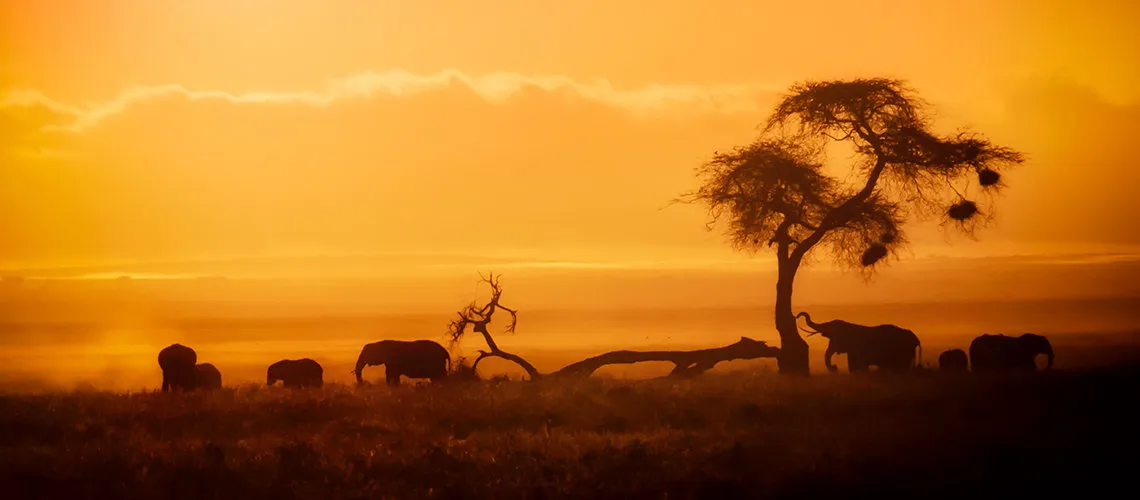
Amboseli’s elephant families are among the best-studied in the world. Two days gives you time to actually read the herds — the matriarchs, the young bulls, the calves learning by watching. Your guide knows the families by sight. Camp is inside the park. The elephants don’t stop moving at sunset just because you do.
Days 3, 4 & 5 – The Masai Mara
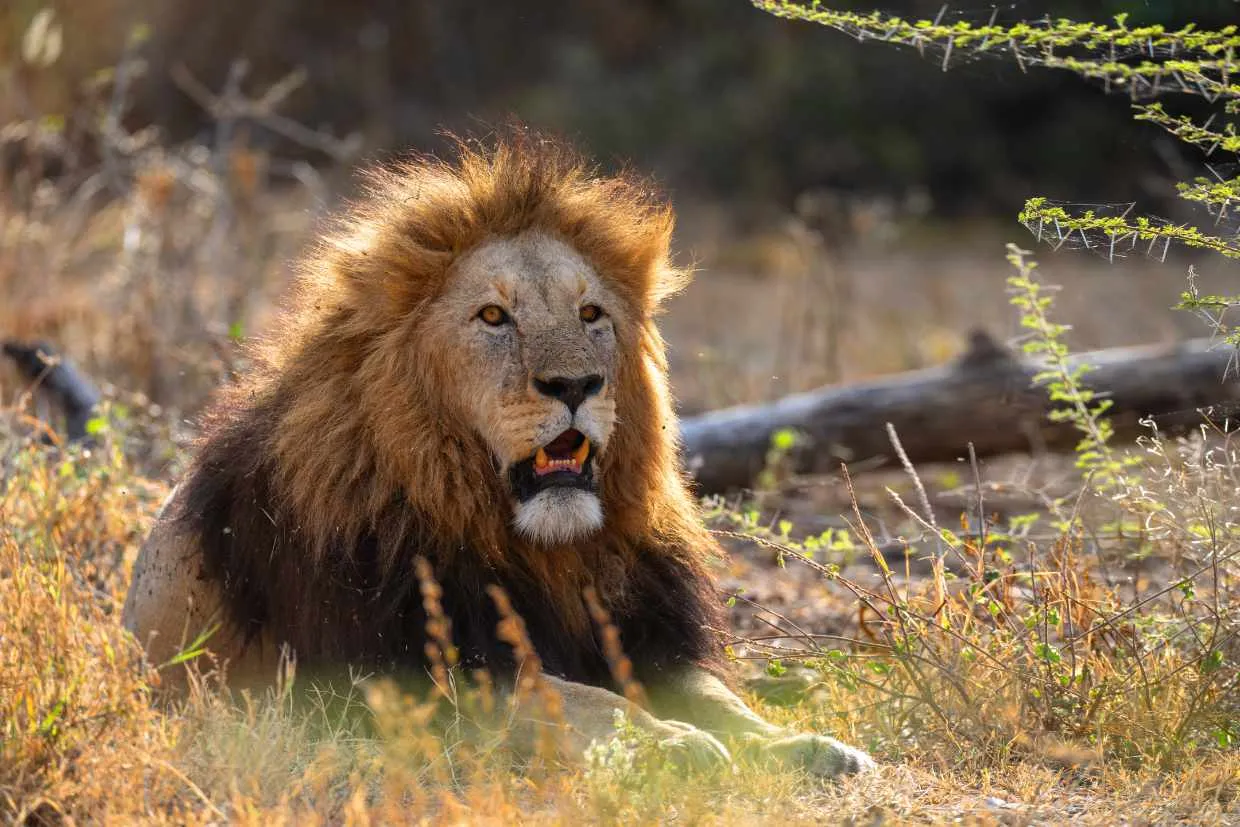
A drive north into the Masai Mara. Three full days in Kenya’s most celebrated reserve — big cat country, with one of the highest lion densities on the continent and cheetah on every open plain.
Between July and October the wildebeest pour in from the Serengeti and the Mara River crossings begin. If your dates fall in this window, you’ll spend time at the crossing points waiting. Sometimes an hour, sometimes longer. When the animals commit and throw themselves into the river, you understand why people come back for this year after year.
Outside migration season the Mara is quieter and still excellent. The predators don’t leave when the wildebeest do.
Day 6 – Mara → Serengeti (via Isibania)
An early start. The road crosses the border at Isibania and drops into Tanzania, the landscape opening up as you head south toward the Serengeti. It’s a long day — six to seven hours of driving — but the border crossing is straightforward and the western corridor scenery is worth watching.
You arrive at camp in the central Serengeti in time for a sundowner. The Serengeti opens its account.
Days 7, 8 & 9 – Serengeti National Park
Three days based in the central Serengeti. Seronera is where the year-round resident predators concentrate — lion prides centred on the kopjes, leopard in the sausage trees along the river, cheetah on the open grassland. No matter the season, there is something here.
You’re camping inside the park. Mornings start early because you’re already where the animals are. No gates to pass through, no drive to get to the game. Just zip open the tent and listen for what moved in the night.
Day 10 – Serengeti → Ngorongoro
A morning game drive before heading east to Ngorongoro. The road climbs into the highlands, the air cooling as you rise. Tonight is in Karatu, just below the rim — warmer than camping on the crater edge and well positioned for an early descent in the morning.
Day 11 – Ngorongoro Crater → Tarangire National Park
Down into the crater at first light. The caldera is 260 square kilometres of enclosed grassland, marsh, and acacia woodland — the Big Five present all year. The black rhino population here is one of the last viable wild groups in Tanzania. Picnic lunch on the crater floor, then the ascent.
Today is a full day — crater in the morning, drive to Tarangire in the afternoon. The two are about three hours apart. You arrive with enough light for an evening game drive. The final park, and the one that most often surprises people. Ancient baobabs, the Tarangire River pulling elephants in numbers that build through the dry season, and a landscape that looks like nowhere else on the circuit. You camp inside the park. Same deal as the Serengeti — when the elephants pass through at night, you hear them.
Day 12 – Departure
A final morning drive in Tarangire before the transfer to Arusha for your international flight — or the connection to Zanzibar if the trip continues.
The loop is complete.
Key Facts
| Feature | Details |
|---|---|
| Duration | 12 days / 11 nights |
| Best Season | July – October for the Migration; January – March for calving |
| Parks Visited | Amboseli, Masai Mara, Serengeti, Ngorongoro, Tarangire |
| Countries | Kenya + Tanzania (border crossing at Isibania, Day 6) |
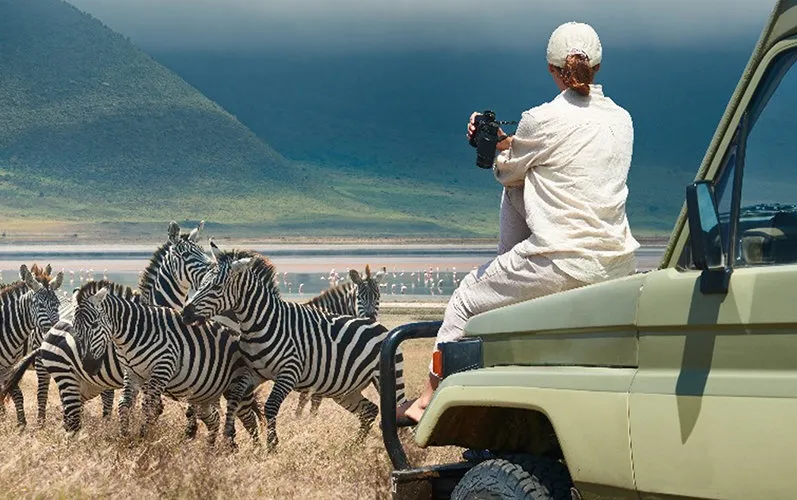
| Transport | Shared 4×4 Land Cruiser with pop-up roof — separate vehicles Kenya / Tanzania |
| Accommodation | Public campsites inside parks + budget guesthouse in Karatu |
| Visas | Kenya eVisa ~$50 + Tanzania visa ~$50 — not included |
| Extensions | Zanzibar, Lake Manyara, Arusha National Park |
| Price | From USD 250 per person per day — final price depends on group size and season. Minimum 2 guests. Peak season Masai Mara fees ($200/day) significantly affect the total. Contact us for a quote based on your dates and party size. |
What’s Included
- Transport in a shared 4×4 safari vehicle with a professional driver-guide
- Guided game drives (morning, afternoon, or full-day depending on itinerary)
- Accommodation in budget lodges, campsites, or permanent tented camps
- Park and conservation fees / national park entry permits
- Transport in a 4×4 safari vehicle with a professional driver/guide
- Fuel for the vehicle during game drives
- Meals during safari days, incl. fresh picnic lunches
- Bottled or drinking water during game drives
- Binoculars
- Airport pick-up / drop-off
- Government taxes and levies
What’s Not Included
- International flights
- Visa fees for entry into the safari country
- Travel insurance / medical evacuation (unless explicitly stated)
- Tips for guides, drivers, camp staff, and porters
- Alcoholic drinks, soft drinks, and premium beverages (unless “all-inclusive” package)
- Optional activities not listed in the itinerary (e.g. hot air balloon rides, walking safaris, night drives)
- Laundry, phone calls, and personal expenditures
- Vaccinations or malaria prophylaxis / medication
- Emergency medical evacuation / AMREF coverage
- Domestic flights (unless stated in the package)