7 Days — Great Migration Tanzania Safari — Luxury
7 Days — Great Migration Tanzania Safari — Luxury
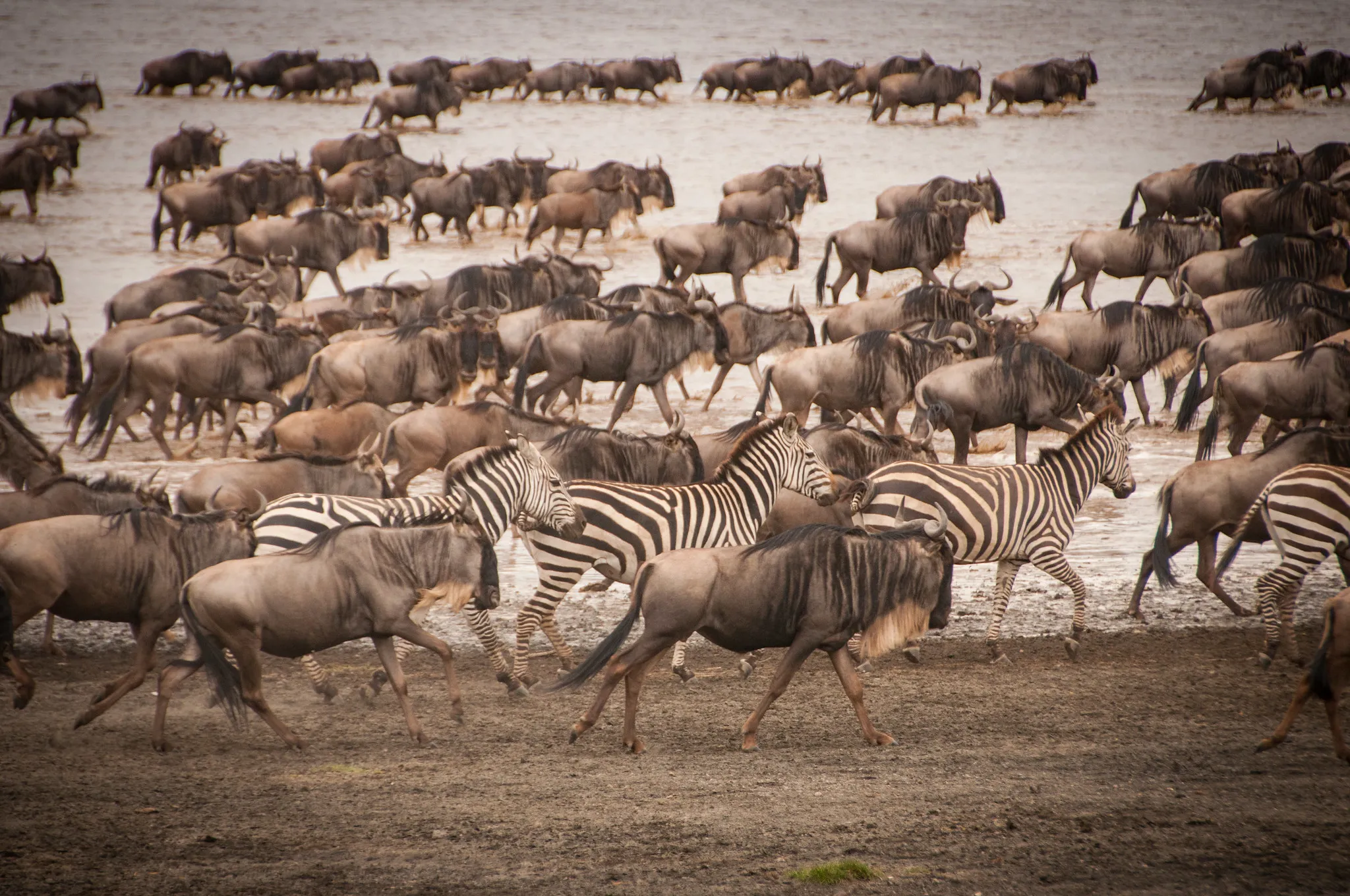
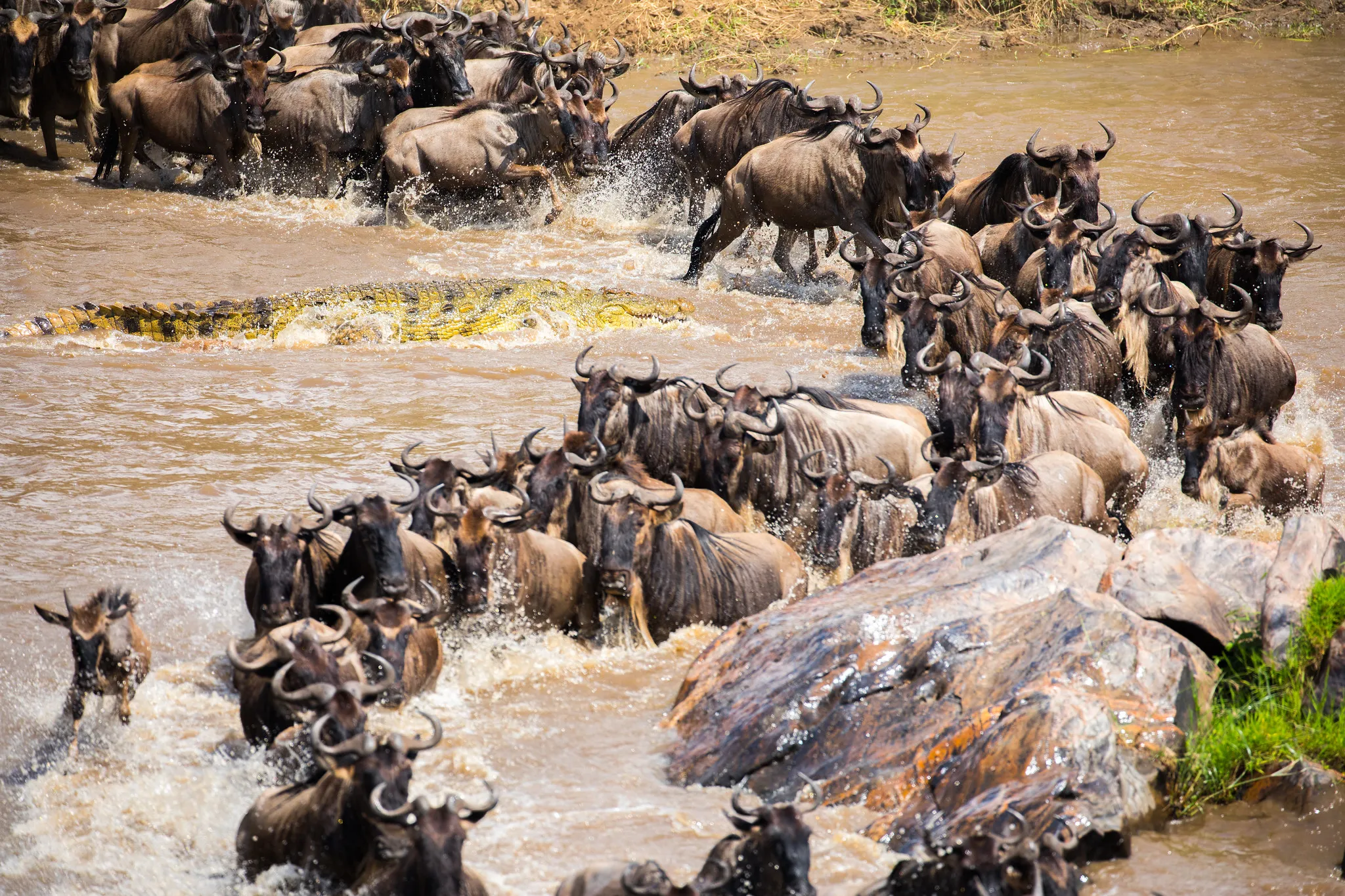
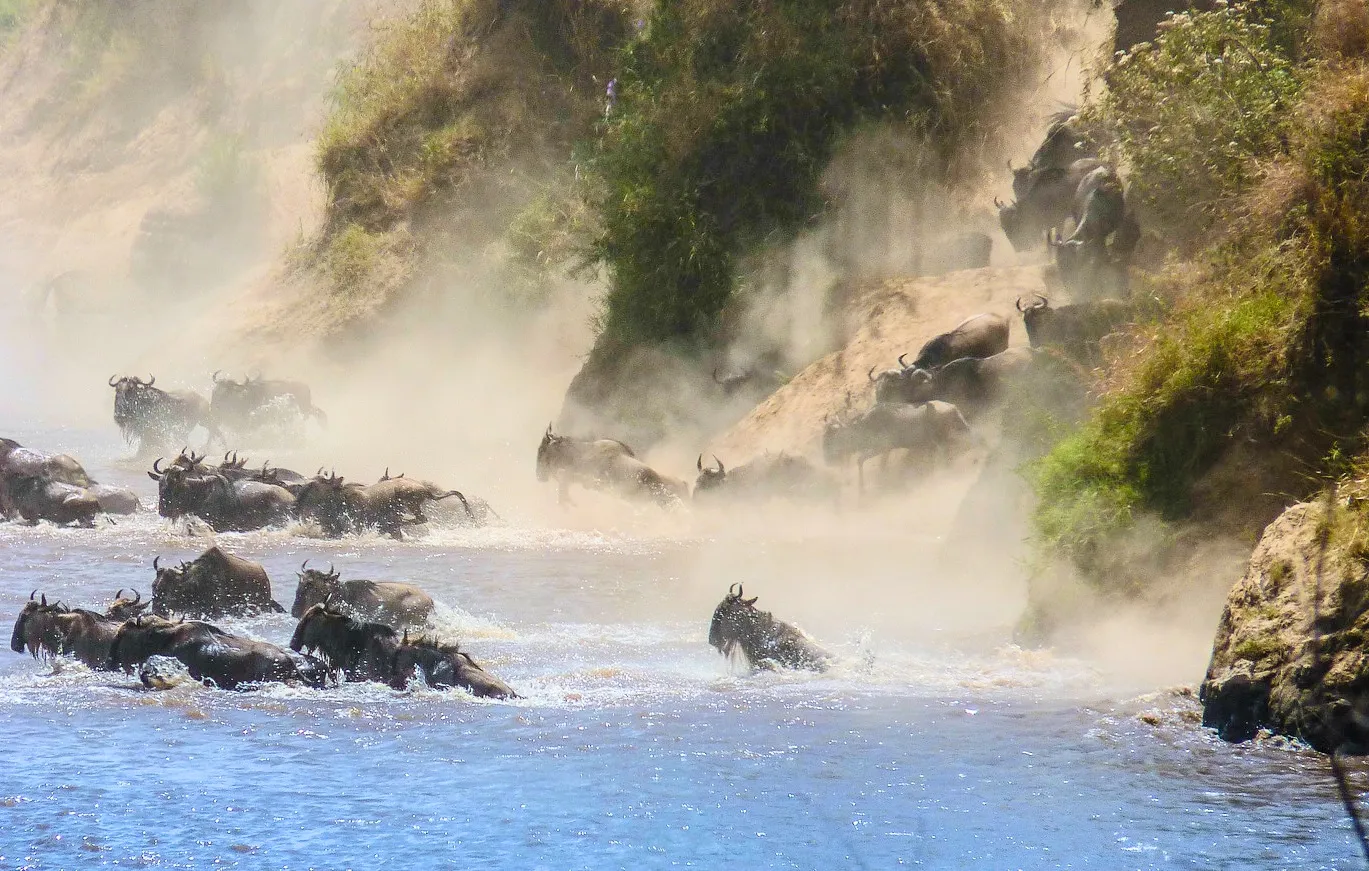
The Great Migration doesn’t follow a fixed schedule. More than 1.5 million wildebeest move continuously through the Serengeti ecosystem in a loop that shifts with the rains — calving in the south between December and March, pushing north through the central plains in the middle of the year, crossing the Mara River between July and October, and returning south again. They’re always somewhere. The job is to be in the right place when you arrive.
This seven-day itinerary is built around that logic. Three parks, camps chosen for their position as much as their quality, and guides who track the herds week by week. The logistics are handled — you focus on what’s outside.
Day 1 – Arrival in Arusha
You land at Kilimanjaro International Airport. Our team meets you at the gate and transfers you to your hotel in Arusha. Over dinner, your guide sits down with you — not a briefing pamphlet, a real conversation about where the herds are right now and how the next seven days will unfold.
Day 2 – Arusha → Tarangire National Park
A short drive to Tarangire and you are in your first game drive. The park is ancient baobabs and then the elephants — in the dry season, herds of fifty or more along the Tarangire River. Lions in the shade of the big trees, leopard in the riverine thickets, over 500 bird species overhead.
The camps here sit inside the park boundary, away from the main gate traffic. You’re in the bush from the moment you arrive.
Day 3 – Tarangire → Ngorongoro
A morning game drive before the 3 hour drive north to the Ngorongoro highlands. Tonight you sleep on the crater rim — the lodge terrace looks out over the caldera, the far wall twenty kilometres away. On a clear evening the scale of it is difficult to process.
Day 4 – Ngorongoro Crater → Serengeti National Park
Down into the crater at first light in a private vehicle, before the day warms and the animals settle into shade. The caldera is 260 square kilometres of enclosed ecosystem — the Big Five year-round, including one of the last viable wild black rhino populations in Tanzania. Your guide knows where to look.
Picnic lunch on the crater floor, then the drive west as the Serengeti plain opens up ahead of you. Afternoon game drive on the way to camp.
Day 5 & 6 – Serengeti National Park
Two full days. Camp position shifts with the season — southern plains for the calving, central Seronera for year-round predator density, northern Serengeti for the river crossings. Your guide tracks the herds in advance and positions you where the action is.
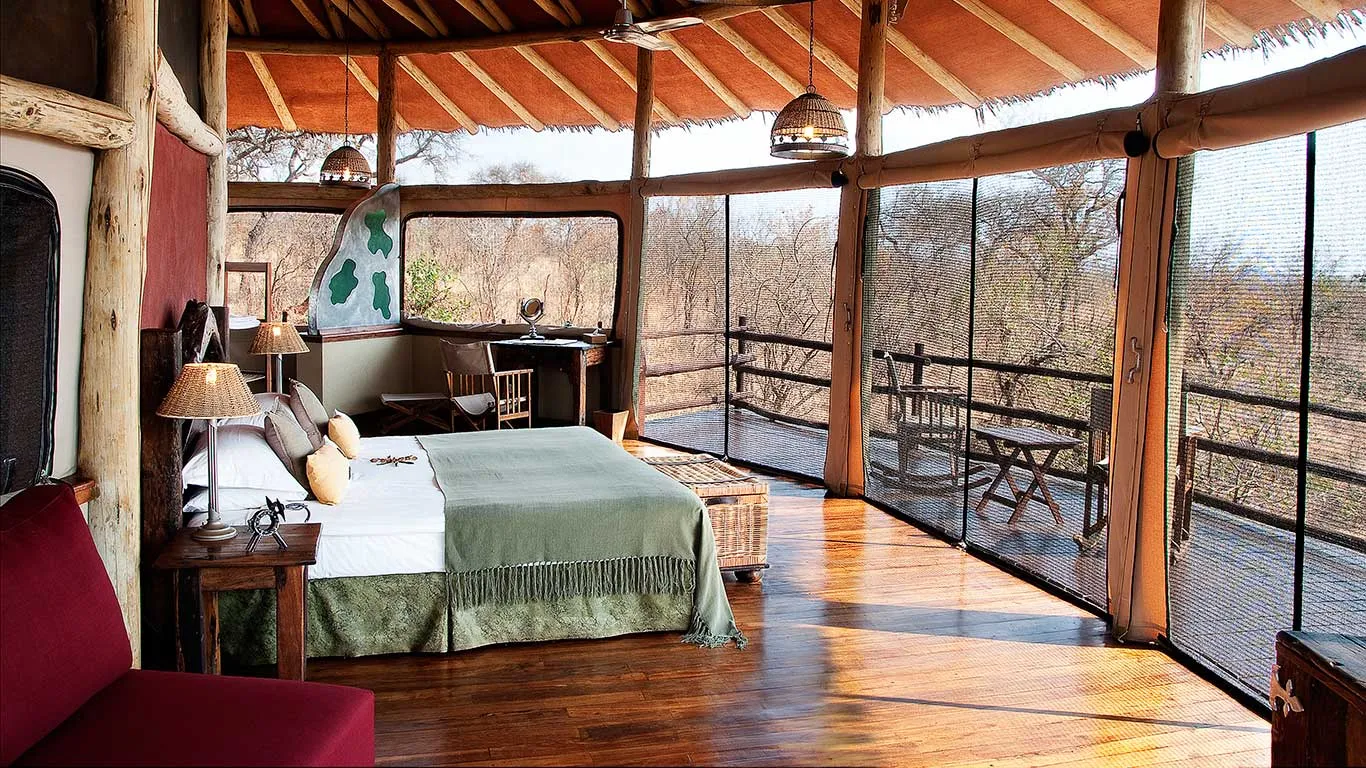
The camps we use here operate at a level where the experience is seamless — early morning wake-up with coffee at your tent, drives that last as long as the sighting demands, bush lunches in the field rather than a rush back to the dining room. A hot air balloon at first light is worth arranging before you travel.
Day 7 – Serengeti → Departure
A final morning drive before the bush flight back to Arusha or directly to Zanzibar if you’re extending the trip.
Key Facts
| Feature | Details |
|---|---|
| Duration | 7 days / 6 nights |
| Starting Price | USD 1050 per person per day (luxury) |
| Best Season | July – October for river crossings; December – March for calving |
| Parks Visited | Tarangire, Ngorongoro, Serengeti |
| Transport | Private 4×4 Land Cruiser with pop-up roof + 1 outbound bush flight (Serengeti → Arusha/Zanzibar) |
| Extensions | Zanzibar, Lake Manyara, Ruaha & Nyerere |
What’s Included
- Private 4×4 safari vehicle with pop-up roof and dedicated professional guide
- Luxury lodge or premium tented camp accommodation (full board: breakfast, lunch, dinner)
- Gourmet meals
- Airport transfers on arrival and departure (private vehicle)
- Bottled water during game drives and basic drinks where included
- Park and conservation fees / national park entry permits
- Guided game drives (morning, afternoon, or full-day depending on itinerary)
- Meals during safari days, incl. fresh picnic lunches
- Bottled or drinking water during game drives
- Binoculars
- Local taxes and government levies
What’s Not Included
- International flights
- Visa fees for entry into the safari country
- Travel insurance / medical evacuation (unless explicitly stated)
- Tips for guides, drivers, camp staff, and porters
- Alcoholic drinks, soft drinks, and premium beverages (unless “all-inclusive” package)
- Optional activities not listed in the itinerary (e.g. hot air balloon rides, walking safaris, night drives)
- Laundry, phone calls, and personal expenditures
- Vaccinations or malaria prophylaxis / medication
- Emergency medical evacuation / AMREF coverage
- Domestic flights (unless stated in the package)