8 Days — Kenya & Tanzania Safari — Mid-Range
8 Days — Kenya & Tanzania Safari — Mid-Range
Three parks, two countries, eight days. The Masai Mara and the Serengeti sit on opposite sides of the same border, but they are not the same place. The Mara is intimate, hilly, and dense with predators concentrated in a relatively small reserve. The Serengeti is vast — 15,000 square kilometres of open plain that dwarfs everything around it. Ngorongoro is something else entirely: an ancient volcanic caldera with its own enclosed ecosystem, its own rules, and wildlife concentrations unlike anywhere on the continent.
You cross the border at Isebania by road — no flights, no wasted days, no inflated costs. Each park earns its place on the itinerary.
Day 1 – Arrival in Nairobi
You land in Nairobi and transfer to your hotel. Our partner team meets you for a safari briefing — where the herds are, what to expect, how the week unfolds. Early night. The drive to the Mara starts tomorrow morning.
Day 2 – Nairobi → Masai Mara
A five to six hour drive southwest to the Masai Mara, arriving in time for an afternoon game drive. Kenya’s most celebrated reserve announces itself immediately — open grassland, big sky, and predators visible from the road before you reach camp.
Day 3 – Masai Mara
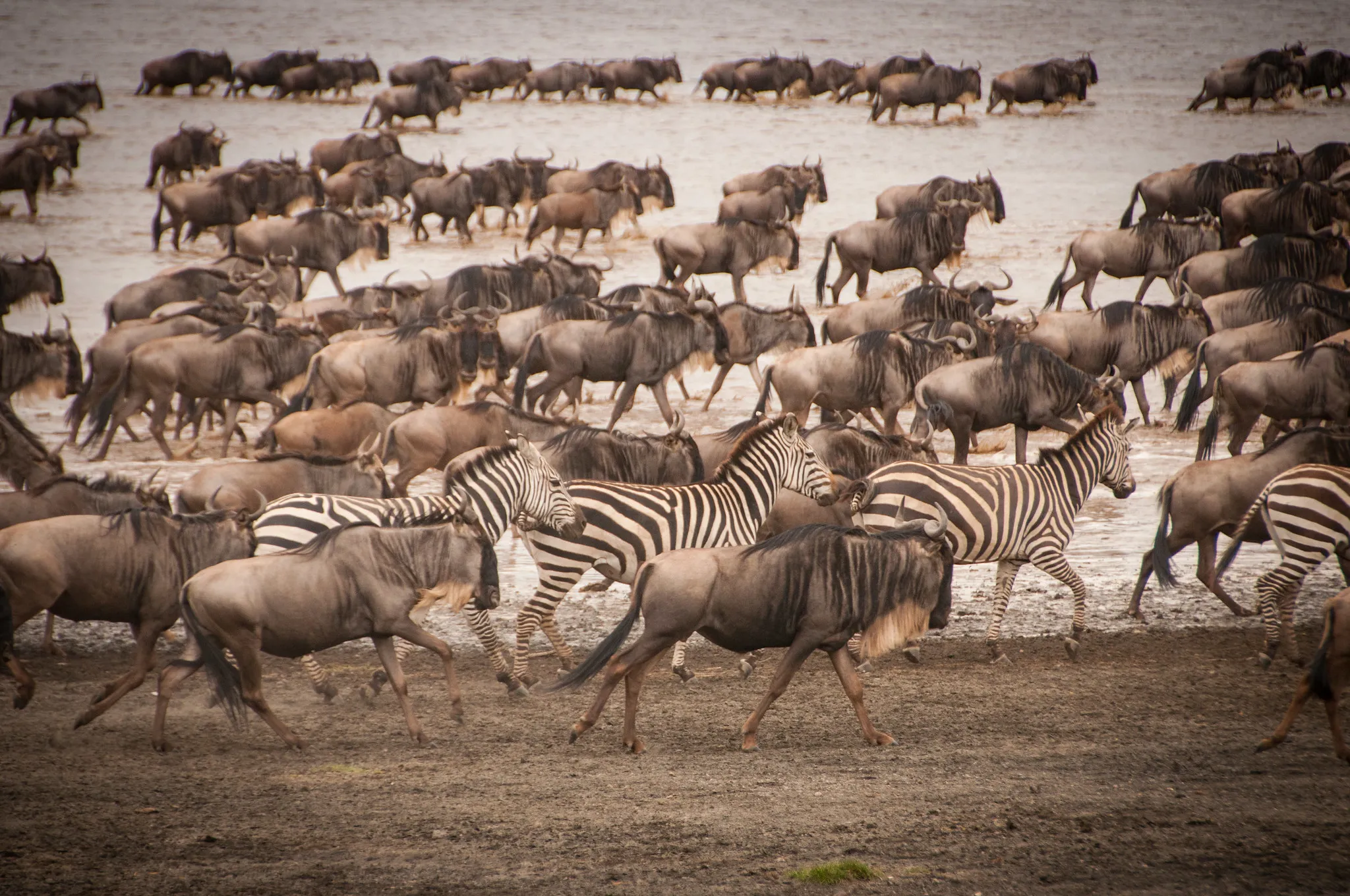
A full day in the Mara. Morning drive when the cats are active and the light is low. Afternoon back out as the heat drops. Between July and October the wildebeest are here in numbers and the Mara River crossings are happening — your guide positions you at the right points and you wait. It’s worth the wait.
Outside migration season the predator density doesn’t change. The Mara is never quiet.
Day 4 – Masai Mara → Isebania → Serengeti
An early game drive before the drive south to the Isebania border crossing into Tanzania. The paperwork is straightforward — the vehicle and crew swap to your Jumbo Trails Land Cruiser on the Tanzania side, and you continue into the Serengeti in time for an afternoon game drive.
The landscape shifts as you cross — same ecosystem, different country, and somehow it feels it.
Day 5 & 6 – Serengeti National Park
Two full days. Central Serengeti around Seronera gives you year-round predator action — lion prides on the kopjes, leopard in the riverine trees, cheetah on the open plain. If the migration is in the north, we position you accordingly.
Two nights here makes the difference. The first day you’re finding your footing; the second you know the terrain and your guide knows what you want to see. Morning drives, afternoon drives, a bush lunch in the field on one of the days if conditions allow.
Day 7 – Serengeti → Ngorongoro Crater → Karatu
An early start and a full morning in the Ngorongoro Crater before the drive to Karatu. The caldera is 260 square kilometres of enclosed ecosystem — the Big Five year-round, including one of the last viable wild black rhino populations in Tanzania. Picnic lunch on the crater floor, then the ascent and the short drive down to Karatu for the night.
Day 8 – Karatu → Arusha → Departure
A leisurely breakfast and the 3.5-hour drive to Arusha. Transfer to Kilimanjaro International Airport for your onward flight — or the domestic connection to Zanzibar if you’re adding a few days on the coast.
Key Facts
| Feature | Details |
|---|---|
| Duration | 8 days / 7 nights |
| Starting Price | From USD 520 per person per day sharing depending on season. $564 peak / $469 low |
| Best Season | July – October for the Migration; January – March for calving |
| Parks Visited | Masai Mara, Serengeti, Ngorongoro |
| Transport | Private 4×4 Land Cruiser with pop-up roof (vehicle swap at Isebania) |
| Extensions | Zanzibar, Amboseli, Tarangire |
What’s Included
- Accommodation (lodges, tented camps, or hotels)
- Transport in a 4×4 safari vehicle with a professional driver/guide
- Fuel for the vehicle during game drives
- Park and conservation fees / national park entry permits
- Guided game drives (morning, afternoon, or full-day depending on itinerary)
- Bottled or drinking water during game drives
- Meals during safari days, incl. fresh picnic lunches
- Airport pick-up / drop-off
- Binoculars
- Local taxes and government levies
- Some itineraries cover meals, cultural visits, or walking safaris
What’s Not Included
- International flights
- Visa fees for entry into the safari country
- Travel insurance / medical evacuation
- Tips for guides, drivers, camp staff, and porters
- Alcoholic drinks, soft drinks, and premium beverages
- Optional activities not listed in the itinerary (e.g. hot air balloon rides, walking safaris, night drives)
- Laundry, phone calls, and personal expenditures
- Vaccinations or malaria prophylaxis / medication
- Emergency medical evacuation / AMREF coverage
- Domestic flights (unless stated in the package)